The Independent: A plea from Palestine’s first female director Judge me by my films not my gender

TUESDAY 02 APRIL 2013

One recent trend in world cinema that has become hard to ignore is the rapid emergence of Arab women film-makers. Directors such as Saudi Arabian Haifaa Al-Mansour, Palestine-American Cherien Dabis and Lebanese Nadine Labaki have been feted at festivals all round the world. Acknowledging this new wave, the Birds Eye View Film Festival is this year celebrating female Arab film-makers.

Not that all the directors involved relish their work being judged in terms of their gender or Arabic background. Annemarie Jacir is often called Palestine’s “first woman feature film director” but the label is clearly beginning to grate a little. Jacir (whose new feature, When I Saw You, opens the festival next week) would prefer to be acknowledged as a film-maker in her own right rather than as a standard bearer for Arab womanhood.

“I don’t think women make different kinds of films to men,” Jacir states. “You just want to be a film-maker. Yes, I am Palestinian, yes, I am a woman – but I am so many other things too… it does box you in at times.”

Read more…

Travel to and explore Palestine’s cultural landscape: Summer academy in Ramallah

Posted on 25 March 2013

European Union National Institute of Culture

3 weeks in Ramallah, live, work and join our visual journey! Summeracademy Ramallah is inviting participants from all walks of life and all corners of the world to meet and mix with Palestinian participants! We will explore the cultural landscape of the region and facilitate the contact within all aspects of Palestinian life, society and close neighborhood. We want to discover unseen images and collect unheard stories that will give a fresh impression of contemporary life in Palestine. Date: 13 August – 3 September.

Our participants will be encouraged to follow their own vision as well as working in groups. By using the full range and capacity of audio-visual and time-based media we will elaborate each work piece to its full potential. The participants will have the opportunity to present their artistic results in the final exhibition.

Of course, we will have a rich social life too. Every season new cafés are popping up all over the place where you can have a shisha while taking snacks. Visit stylish restaurants and colorful  barbecues which are open until 4 in the morning. Ramallah´s nightlife offers an interesting cultural program of free concerts of Arab, Classical or Rock music in public spaces. You can listen to lectures in lush gardens under fig trees, watch Art House Films at Al Kasaba, dip into the world of the Hip and the Beautiful at Bar Beit Al Aneesa, listen to famous Khalas Rock band or Arab singer-songwriters and a lot more to explore and have fun.

We look forward to make excursions to Bir Zeit, and if possible, to Jerusalem and Nablus to visit galleries, artistic projects and theater projects, Slow Food initiatives etc.

If you have personal questions, please let us know: office@summeracademyramallah.org!

To apply for the workshop please go to Application in the menu bar or click here.

Excursions to several cultural organizations in the region, e.g.:
Al Qattan Foundation,  Al Sakakini Cultural Center,  Al Kasaba CinemaBir Zeit MuseumArt School RamallahMahatta Art GalleryAl Ma´amal Art GalleryAl Hoash, Al Riwaq Architectural CenterDanish House in PalestineThis Week In Palestine(Monthly Cultural Magazine)

Nabila Irshaid offers her expertise in art in public space, participative art, art as a process and audio – visual concepts. She can provide her knowledge about the cultural landscape of Ramallah and its surroundings and has some knowledge about local life.

Tobias Hammerle will be the second instructor during the workshop and will share his many technical skills and experience in teaching all over the world.

More information about the Instructors 2013 you’ll find here.

This article originally appeared here

About Tales of a City by the Sea

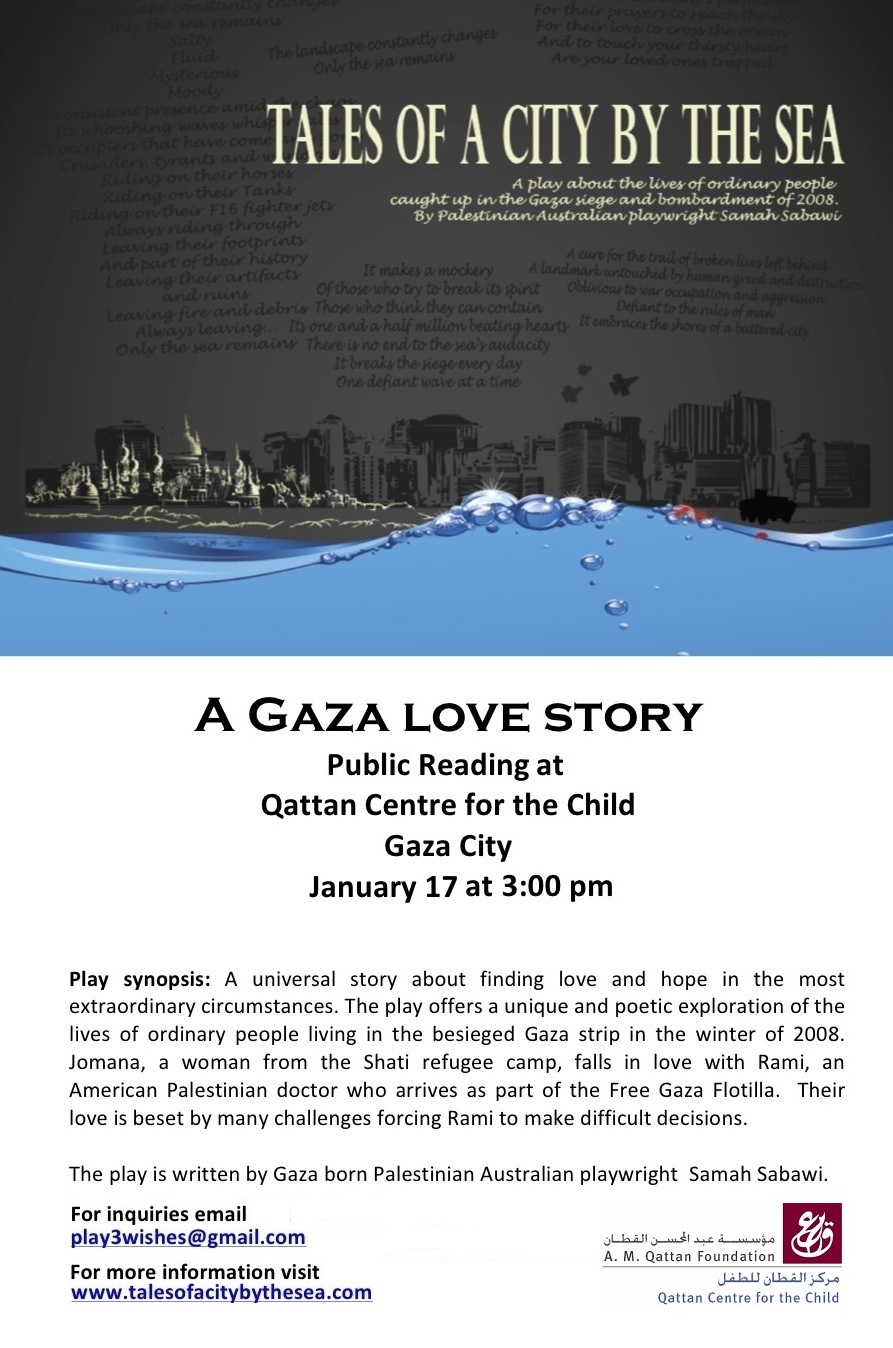
The play Tales of a City by the Sea is a unique and poetic journey into the lives of ordinary people in the besieged Gaza strip prior to, during and after its bombardment during the winter of 2008.  Jomana, a Palestinian woman who lives in the Shati (beach) refugee camp in Gaza falls in love with Rami, an American born Palestinian doctor and activist who arrives on the first Free Gaza boats in 2008. Their love is met with many challenges forcing Rami to make incredible decisions the least of which is to take a dangerous journey through the underground tunnels that connect Gaza to Egypt.  Although on the surface this love story appears to explore the relationship between diaspora Palestinians and Palestinians under occupation, there is a broader and more universal theme that emerges – one of human survival and tenacity.  Tales of a City by the Sea avoids political pitfalls, ideological agendas and clichés by focusing on the human story of the people in Gaza. Although the play’s characters are fictional, the script is based on real life events and is a product of a collection of real stories the author Samah Sabawi and her family have experienced during the events of the past several years. Sabawi has written most of the poetry in the play during the three-week bombardment of Gaza in 2008/2009.

The writer Samah Sabawi is a Palestinian-Canadian-Australian published writer, commentator and playwright.  She has travelled the world and lived in its far corners, yet always felt as though she was still trapped in her place of birth Gaza.  The war torn besieged and isolated strip has  shaped her understanding of her identity and her humanity.  So what else could Sabawi do but to indulge in Gaza’s overwhelming presence and to succumb to tell the stories of her loved ones back home.  Her most recent play Tales of a City by the Sea is dedicated to them and to all of those who still manage to have faith and hope even as the sky rains death and destruction.

The script is available to interested theatre makers upon request.  Please email play3wishes@gmail.com for more information.

Ms. Sabawi speaking at the Launch of the The People's Charter To Create a Nonviolent World

Photo courtesy http://thepeoplesnonviolencecharter.wordpress.com/launch-events/

Follow Samah Sabawi on Twitter @gazaheart

Samah Sabawi’s professional bio can be found here

For more information on Samah Sabawi: http://en.wikipedia.org/wiki/Samah_Sabawi

Classical music moves into the camps of Palestine

Published March 23rd, 2013 – 07:00 GMT on AlBawaba
How often does one see pictures of brave Palestinian children facing up to Israeli soldiers and tanks, armed only with stones in their hands and often paying with their lives for daring to do so?

Ramzi Aburedwan was one such child, who grew up in the refugee camp of Al Amari near Ramallah. At the tender age of 8, he witnessed his best friend being killed during an Israeli military operation. He then found himself throwing stones during the first Intifada and as a street combatant Aburedwan seemed destined for an Israeli prison or a Palestinian martyr’s poster. But fate decided to intervene.

At 17, he was invited to a music workshop in Al Bireh, adjacent to Ramallah, where he fell in love with the art and started to learn to play the viola. Replacing stones with a musical instrument led to a journey of channelling his anger into creativity and of personal transformation.

After studying for a year at the Edward Said National Conservatory of Music (ESNCM) in Ramallah and thereafter attending a summer workshop in the United States — at the Apple Hill Centre for Chamber Music of New Hampshire — he enrolled at the Conservatoire National de Region d’Angers.

In 2000 Ramzi created the ensemble “Dal’Ouna”, music that symbolised the link between East and West. It flowed from an encounter between Palestine and France, from the melting of pure traditional Middle Eastern songs with mixed jazzy compositions, played on Western classical musical instruments (viola, violin, clarinet, flute, guitar, piano), and traditional Eastern instruments (bouzouk, oud, darbouka, bendir, etc).

In 2005, he was awarded the “DEM” gold medal for viola, chamber music and music theory. While in France, he also learnt to play the piano.

Yearning to share his knowledge and experience, and inspire a new generation of Palestinians, by helping their anger and frustrations find musical expression, Aburedwan established Al Kamandjâti (The Violin) in October 2002. It was to be the place where Palestinian children and youth could learn music and develop their culture.

In August 2005, Riwaq, the Palestinian architectural organisation engaged in conservation and rehabilitation, completed the renovation of the Al Kamandjâti Music Centre in the old city of Ramallah and it was here that Aburedwan launched his nonprofit musical enterprise, funded mainly by European donors.

Taking music to the people, Al Kamandjâti set up music schools for Palestinian children in various cities, villages and refugee camps. These music schools offer children the opportunity to learn to play music, to discover their cultural heritage as well as other musical cultures, but above all to explore their creative potential.

In addition, Al Kamandjâti produces numerous concerts and several music festivals throughout the year as part of its mission to bring music to all Palestinians.

Aburedwan explains the rationale: “Perhaps the least recognised effect of the violent Israeli occupation on the lives of Palestinian people is the undermining of culture, art and leisure. When a regime wants to weaken a people, it uses psychological, cultural and physical means. It attempts to erase tangible evidence of that people’s unique cultural heritage. Our struggle must be cultural and militant, artistic and political, and economic. But on no account should we forget the primary reason behind the projects and activities led by Al Kamandjâti, which is to educate children, who suffer most from the unjust politico-economic situation.

“We cannot afford to sit back and wait for favourable political decisions which would establish a Palestinian State,” he says. “We must proactively work on galvanising Palestinian cultural life. We must give our children the opportunity to think beyond soldiers and tanks. They must think creatively, not about the destruction of their country, but about rebuilding their way of life and future.”

In the West Bank, Al Kamandjâti today provides music training to around 500 students in places such as the Al Amari, Jalazon, Qalandiah and Qaddura refugee camps, the village of Deir Ghassana, the old cities of Ramallah and Jenin, and in Tulkarem.

Since 2005, Al Kamandjâti, with ten French musicians, has also organised annual music workshops in the Palestinian refugee camps of Lebanon, where, today, they have 60 students at Bourj el Barajneh and Shatilla.

In Palestine, Al Kamandjâti employs 22 musicians who teach violin, viola, cello, guitar, flute, clarinet, oboe, bassoon, trombone, trumpet, saxophone, piano, accordion, oud, nay, Arabic percussion, orchestra, singing, harmony, choir, improvisation and music theory.

“Music is a universal language,” Aburedwan says. “We encourage Palestinians to use this artistic tool to harmonise and enrich their cultural life, promoting international awareness and recognition of the Palestinian nation.

“Through music, Al Kamandjâti seeks to show that education and culture can transcend and overcome the Israeli violence from which Palestinians suffer,” he adds. “Learning music provides children with a form of expression to channel their energy creatively and constructively. Are not today’s children tomorrow’s adults? Classical music is, for the children, a discovery. We introduce each one to an instrument. Moreover, these workshops enable children to gather in a disciplined setting, whether as neighbours or friends or new acquaintances”.

Many young international musicians have been working at Al Kamandjâti, discovering music and a practical approach to mastering various instruments with Palestinian children. Jason Crompton came from New Jersey four years ago to visit his sister in occupied Jerusalem and after learning about Al Kamandjâti, he stayed on to teach piano and conduct the orchestra. He learnt Arabic to communicate with the children and eventually married a fellow teacher from Italy, Madeleine, who teaches the flute and also works with UNRWA schools in the refugee camps around Ramallah. They have a child and now live in Ramallah.

“The feeling of sharing in the musical experience with anyone who wishes to indulge is special and we believe that we belong here,” Crompton says.

Their story lends credence to the oft-held belief that music transcends both borders and barriers. At Al Kamandjâti, it has been an enriching experience for both the Palestinian children and the teachers of many nationalities.

Not only does Al Kamandjâti teach Palestinian children how to play music, it also teaches some of them how to repair, maintain and tune instruments.

Shehadeh, a young man who has been involved in setting up a local lute-making workshop, spent three months in Italy with stringed-instrument makers who had previously been to Palestine, learning to repair and make instruments. Today his workshop adjoins the Al Kamandjâti building in Ramallah.

Al Kamandjâti organises The Music Days Festival in June, in partnership with the French Cultural Centres Network. The festival lasts 12 days and takes place in more than ten Palestinian cities. A Baroque Music Festival follows in December and various churches in the cities of the West Bank and occupied Jerusalem host it.

Al Kamandjâti also engages in exchange programmes abroad with partner organisations. Some students have been given the opportunity to take part in music workshops abroad to improve their technical skills. Khalil, the coordinator, explains, “We had nine students who completed their scholarships in France last year — in violin, percussion, bass, clarinet and guitar, and two of them learnt how to fix string-section instruments.

“We have two blind brothers, Mohammad and Jihad, who today teach percussion and oud at the Helen Keller Centre in [occupied] Jerusalem,” he adds.

Today, Al Kamandjâti stands for Aburedwan’s transformation from a stone-pelter to a viola player and his dream of sharing his knowledge and experience with his people, bringing joy to the children growing up in refugee camps and under occupation.

This article appeared on http://www.albawaba.com/entertainment/palestine-camps-music-479027

Drama School in the West Bank Theatre of Hope

Students at the West Bank’s first and only drama school talk about their struggle to establish a theatre in the West Bank and their desire to change society for the better through theatre. Ulrike Schleicher spoke to three of them

When Palestinian Malak Abu Gharbia was 12 years old, she met the famous Syrian actor and comedian Doraid Lahham after a theatre performance. “He asked whether I wanted to become an actress one day too,” says Malak, who is now 20 years old. “I wasn’t able to say a single word.” Since the encounter, film and theatre have been part of her life. She soaked up everything that had anything to do with them, read plays and went to see performances whenever possible.

For the past half year, Malak has been able to live out her passion: she is studying acting at the theatre academy in Ramallah in the West Bank. Juliet in Shakespeare’s Romeo and Juliet was one of her first roles.

Malak, who was born in Jerusalem, learns various acting techniques such as improvisation as well as singing, fencing and pantomime five days a week. She also trains her voice and rehearses. Although the academy is the first and only acting school in the West Bank, her training is no different to what she would receive in Europe.

The academy was founded in 2009 with the help of the Folkwang University of the Arts in Essen, Germany. The teachers there advise the staff at the Ramallah academy and are helping them to build what will in future be a state-approved college. Exchanges and guest performances are part of the cooperation.

So far, the lion’s share of funding has come from Germany, but the Palestinian Authority in Ramallah would also like to contribute in the future. Speaking at the opening of the academy in 2009, Prime Minister Salam Fayyad said that the academy is helping to maintain the history, heritage and culture of Palestine.

Read more…


2013 London Palestine Film Festival

Welcome to the 2013 London Palestine Film Festival

This year’s programme comprises 24 events at the Barbican Cinema and University of London, involving 38 titles, 24 guest speakers, and the UK’s first international conference on Palestine and the Moving Image.

Opening with a gala screening of David Koff’s trailblazing 1981 documentary, Occupied Palestine, the 2013 programme boasts historic depth with rarities including a thematic session marking the 25th anniversary of the first intifada, and an outing for Elia Suleiman’s debut, Homage by Assassination (part of 1991 portmanteau The Gulf War… What Next?).

There’s plenty of fresh material on offer too, with some 20 premieres, including a sharp new doc on life in the Syrian Golan heights, a revealing account of the vast quarrying industries in the West Bank, and the story of a spectacular kite flying world record bid in Gaza. Exceptional shorts and animations run throughout the programme, along with some bold new experimental works from Palestine and beyond.

For more information on the festival visit Palestine Film Foundation

Recipes, Not Rockets: Cookbook Offers New Lens On Gaza

By EMILY HARRIS

For NPR

March 20, 2013 3:17 PM

When you think about the Gaza Strip, do you think “organic farming”? How about “family dairy”? Would you expect California pistachios to flavor made-in-Gaza baklava? Have you heard that Hamas has a 10-year plan to develop sustainable local agriculture?

new cookbookThe Gaza Kitchen, weaves little-known stories of Gaza food and farming among Palestinian home-cooking recipes. It highlights flavors particular to Gaza — both the crowded, skinny, famous strip of land pinned between Egypt, Israel and the Mediterranean, and the more extensive, southeastern Gaza District of historic Palestine that existed before the first major Arab-Israeli war in 1948.

“Cumin, garlic and chilis are kind of the quintessential trio of the cuisine,” co-author Laila El-Haddad, a Gazan now living in Maryland, tells The Salt. “Herby, peppery, lemony, piquant. A lot of green dill, as well as dill seeds, as well as sour flavors in all their forms — lemon, sour pomegranates, lots of peppers.”

El-Haddad and co-author Maggie Schmitt dreamed up this cookbook after Schmitt visited Gaza in 2009 and wrote a piece in The Atlantic, “Eating Under Siege,” describing how Israel’s severe restrictions on Gaza affect what people eat.

Doing background research, Schmitt found almost nothing online about local food, save for a few columns from El-Haddad’s blog-turned-book, Gaza Mom. The two talked and emailed, but first met in person on the ground in Gaza, when the Rafah border crossing to Egypt opened in 2010 and they could both travel there. They discovered people who have been displaced for decades preserving a very precise sense of identity through food.

“Third- and fourth-generation Palestinian refugees, who make up the bulk of Palestinians in the modern-day Gaza strip, really held on to the very specific food traditions of their villages, down to how they would finish a stew,” says El-Haddad. “Someone from the village of Beit Timma might finish their stew with fried onion, never garlic. Whereas someone from Gaza City would add dry red peppers, or generally add a lot of heat. And that would never be the case with the fahaleen, those from the farming, interior areas.”

Recipes cover salads, stews, breads, appetizers, desserts and drinks. Kishik, we learn, are breadlike disks of fermented wheat traditionally stored for months as a way to preserve milk products for cooking. The Gazan version uses sheep’s milk and red pepper flakes. Fattit ajir is a spicy roasted watermelon salad, a specialty of the southern Gaza strip. There is advice on what basic ingredients to have on hand, and Gazan “common sense” cooking traditions. For example, rinse chicken, rabbit or fish in cold water, with a bit of flour and lemon juice, before cooking.

By spending time in private kitchens, El-Haddad and Schmitt aimed not only to capture and codify Gazan cuisine, but to tell a new tale of Gaza. “For us, describing life in the homes, family economy, households, was really important,” says Schmitt, “because that side of the story in Gaza is almost completely unknown and underrepresented.”

The Gaza Kitchen tells a political story, too, with sidebars on U.N. food rations, electricity and water shortages, Israeli limits on trade and restrictions on fishing.

“Gaza was once famous for its fish,” El-Haddad and Schmitt write. “Now the Israeli Navy limits Palestinian fishing boats to just three nautical miles from the coast. Violations are punishable by violent harassment, boat seizure, arrest and gunfire.”

As part of the ceasefire between Hamas and Israel after shooting exchanges last November, the fishing limits were increased to six nautical miles off Gaza’s shores, still short of the 20 set by the Oslo Accords two decades ago.

However, an Israel official confirms a three mile limit was re-imposed March 21, in response to rockets fired from Gaza during President Obama’s visit. The official NPR spoke with did not know how long the three-mile limit will be enforced.

Setting food overtly into a political context is one way this culinary exploration of the region differs from the high-profileJerusalem: A Cookbook, published last year by the Jewish-Muslim duo of celebrated chef Yotam Ottolenghi and Sami Tamimi, the head chef at Ottolenghi’s London restaurants. Ottolenghi and Tamimi’s cookbook summarizes the city’s centuries of upheaval and disputed ownership today and takes on the “hummus wars” — passionate discussions over whether Jews or Palestinians bring the dish closest to perfection. But it mostly sticks to food.

“I think we dive further into the politics, and they kind of skirt it,” Schmitt says. “But reading between the lines, I feel like our intentions are kind of parallel, or sympathetic at least.”

Schmitt and El-Haddad say they’ve been asked to be part of a discussion with Ottolenghi and Tamimi, something The Gaza Kitchen authors would welcome.

“We like to say that when you’ve entered someone’s kitchen, when you’ve tasted their food, it’s harder to bomb that person,” El-Haddad says. “You begin to think of them as human beings.”

She hopes this peek into home cooking in Gaza starts a conversation about the place and people that “doesn’t include the words terrorism, fanatics and rockets.”

Below, two Gazan recipes for spring.


Recipe: Shay A’shab (Herbal Tea)

El-Haddad and Schmitt write that herbal tea, particularly sage tea, is a traditional way to end a meal, along with fruit and nuts. They found this refreshing herb combination at the Gaza Safe Agriculture Project organic farm.

6 sprigs lemon verbena

6 sprigs fresh mint

3 sprigs oregano or flat-leafed thyme

2 sprigs dried sage

2 sprigs Italian basil

1 sprig rosemary

Combine herbs in a pot and add boiling water. Steep for 5 minutes or until color is a pale yellow-green. Sweeten as desired.


Recipe: Avocado Salad

This recipe says avocados are not native to the Gaza area but were introduced by Israeli settlers. Israel pulled out all settlers from the Gaza strip in 2005, but El-Haddad and Schmitt write that “the avocados have been adopted with enthusiasm.” This mash may sound somewhat similar to guacamole but brings distinct flavors and presentation. El-Haddad and Schmitt call it “an elegant starter, part of the new Gazan repertoire.”

1/2 teaspoon salt

2 cloves garlic

1 green chili, chopped

2 small ripe avocados, peeled and seeded

Juice of 1 lemon

1 tablespoon yogurt

Extra virgin olive oil

Paprika, cumin and sliced lemon for garnish

Mash garlic and chili pepper with salt in a mortar and pestle. Add avocado, yogurt and lemon juice and mash until smooth, stirring the bottom of the bowl to make sure all the garlic is mixed in. Swirl the top of the salad with the bottom of a spoon in a circular motion creating a small canal, then drizzle with olive oil. Decorate with paprika and cumin as follows: Wet your thumb with some water, place it in a bowl of paprika, then press down on edge of avocado salad, leaving a red fingerprint. Repeat procedure, alternating paprika with cumin, all around the bowl. Garnish with thinly sliced lemon. Serve with Arabic bread.

Emily Harris is NPR’s Jerusalem correspondent.  This article first appeared here..


Let Gaza surprise you!

By Samah Sabawi

20130122_115944

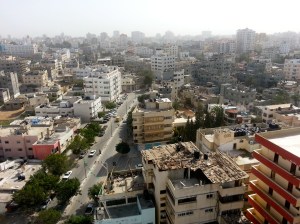
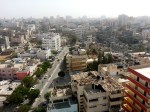
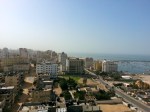
Gaza is one of the most reported on and yet least understood places on earth.  Its mere mention conjures up images of war victims, war criminals, piles of rubble, militants with guns, dead children and weeping mothers.  A simple google search will bring up disturbing images of heart break, terror and destruction.  But all of this is an infliction on a place that has neither surrendered its identity nor lost its beauty to decades of violent Israeli occupation.

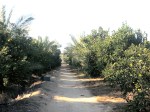
Gaza is a city of many tales.  While some are about loss, grief and misery, many others are about enduring love, triumphant moments, tenacity, passion, music and hope that lives beyond the confines of the siege and the occupation.  If you dig deeper than the negative headlines and the devastating news reports you will find many pleasant surprises.  You can take a walk along Gaza’s gorgeous fields, enjoy its magical sunsets, get to know its warm people, visit its ancient sites and eat its delicious dishes.  You will find in Gaza everything that would make you love life with a passion!  So join me here to explore some of Gaza’s unknown side.

The Arts:

There is a common belief that Gaza’s art scene is all but dead.  While it may be true that art in general is not a great priority for the people in Gaza who are too concerned with bigger financial and political issues, Gazan artists continue to create and to excel in their fields.  There is also an appreciation of the need to encourage art in children starting from a young age.

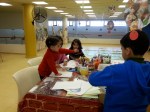
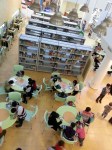
One establishment worthy of salutation for supporting the arts is the Qattan Centre for the Child in Gaza.  This cultural centre is an oasis for the hearts and the minds of children.  Equipped with a large library painted in vibrant colors and comfortable eye soothing furniture the QCC in Gaza focuses on developing the children emotionally and intellectually through visual art, music, education, cultural events and much more.

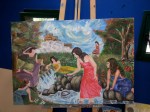
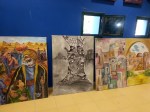
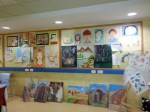
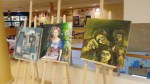
Below are some images of the QCC in Gaza.  Keep in mind all of the paintings you’ll see in some of these photos were in fact painted by children under 15 years of age at the centre.

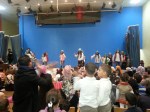
The Qattan center was built on land donated by the Gaza municipality and has succeeded in meeting its goal of creating an educational and stimulating space for children and their caregivers.  Parents are encouraged to join their children in the library, engage with them over art and craft activities, or just watch them proudly as they perform their song and dance routines.

Membership at the QCC is free of charge to all children in Gaza from all walks of life and some of the classes offered charge a small symbolic fee.  Many of the events are also free of charge such as the concerts captured in the video below that took place as part of the winter camp activities in January 2013.  In this video below you’ll see a variety of instruments, you’ll hear music of both Arab and western origins ranging from Gershwin to Darweesh.

Also worthy of special salutation is the Gaza Music School and its incredible teachers and talented children.  The children featured in the next video are nine years of age.  They are very dedicated to the art they practice in spite of all the challenges they face including Israel’s bombardment of the Gaza Music School  in 2009.


The landscape

The Gaza Strip is densely populated mostly by refugees who fled Israel’s war of ethnic cleansing in 1948 and have not been allowed to return to their homes since.  As the population continues to grow in the besieged strip the natural landscape changes to make way for more cement structures and buildings to accommodate this growth.

However, population growth is not the only challenge facing Gaza’s green spaces.  Agricultural land  is shrinking as Israel usurps more of Gaza’s water supplies and if that’s not enough, Israel’s siege, blockade, frequent bombardment and occasional land incursions have left their mark on many of Gaza’s farming land.  A recommended report that sheds great light on this is the UNISPAL report Farming without Land, Fishing without Water.

Below are two pics of bombed trees in our farm in Gaza. The first depicts a tree totally uprooted from the power of a one ton bomb blast.   The second photo  depicts a tree that was uprooted from the blast, flew in the air and actually landed straight on top of another tree.

Despite all of the challenges and the uncertainties of Israel’s incursions and bombings, some farmers have insisted on maintaining their land.  When visiting their farms you get a sense of what Gaza’s landscape looked like before Israel’s war of ethnic cleansing began.   You can imagine how before the refugees were chased into the far corners of their homeland to settle into camps under occupation, how most of Gaza’s natural landscape would have looked like.

The Sea

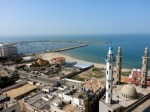
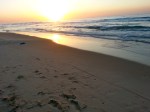
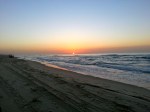
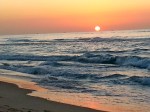
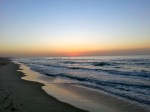
Perhaps the most important feature of Gaza is its sea.  It is the only landscape that remains unchanged, unaffected by the occupation and the aggression.  The sea is an open recreational space that is free of charge.  For Gazan families the sea is a cure for all of life’s problems.

The food

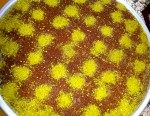
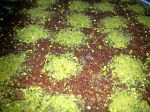
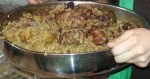
Finally, no matter where you go to in Palestine, you will always be overwhelmed with warm hospitality and great food.  Gaza is no different.  Here are some pics of some of my favourite dishes, but if you’re looking for a more comprehensive list along with recepies I highly recommend you visit The Gaza Kitchen.  Bon appétit or as they say in Gaza Saha we afya!

Arab Australian photographer Sabra a finalist in the Qantas Spirit of Youth awards

Gazing at a portrait of Gaza

f0de429e-2b5c-4479-9392-97f62be7c33d

Stephanie Zevenbergen

March 5, 2013

Hume Weekly 

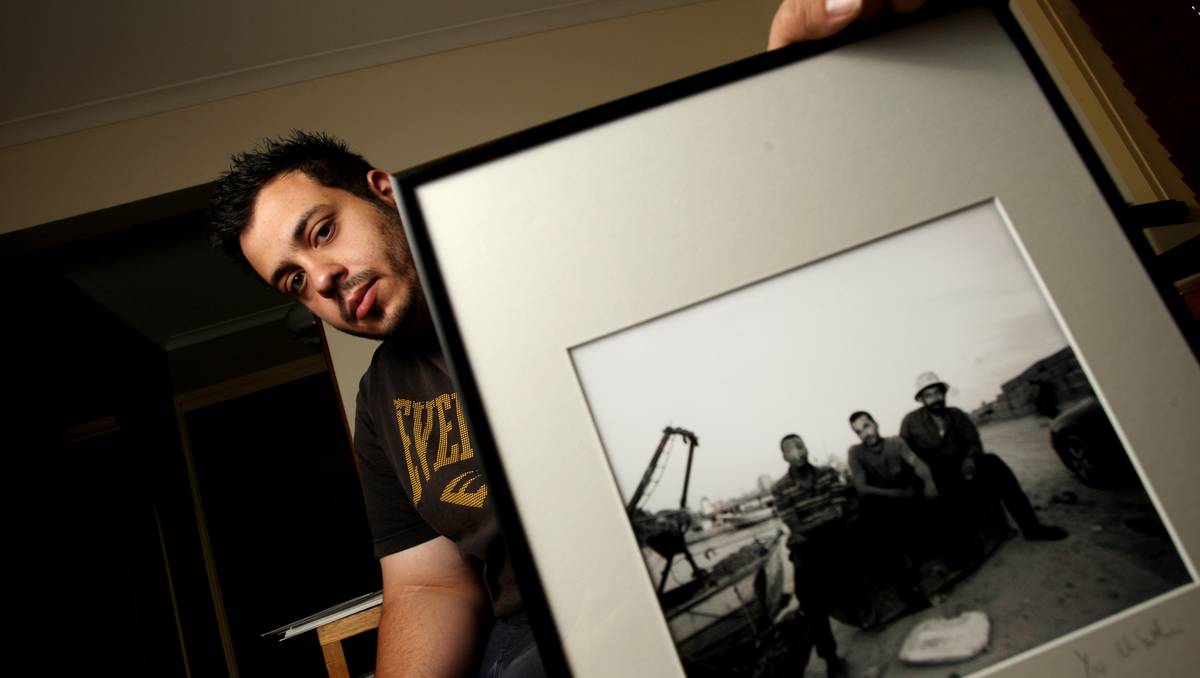
HIS photographs portray a silent picture of suffering in Palestine, of people stuck in violent conflict.

Telling the stories of refugees in Palestine through photography is close to Ahmad Sabra’s heart.

For the 27-year-old Broadmeadows resident, a recent trip to the Gaza Strip in Palestine proved memorable in more ways than one. Firstly, it was a trip back to his native land; now the photos he took there are receiving accolades in Australia.

Sabra, a photographer, is one of 13 national finalists in the Qantas spirit of youth awards 365 (SOYA), which offer the first-prize winner $5000 for air travel.

Last year, across 11 categories, SOYA drew more than 20,000 entries from more than 2400 young artists, designers, filmmakers, photographers and musicians.

Sabra is also one of 53 finalists for the National Portrait Gallery’s national photographic portrait prize. The winner takes home $25,000.

He says photographing refugees has personal meaning for him as he migrated to Australia from Lebanon in 1997. ‘‘I have a soft spot for them,’’ he says. ‘‘Growing up in Lebanon we used to see all the refugee camps. Going back to Gaza and seeing their living conditions motivated me to do more with Palestine.’’

Sabra’s work includes portraits of Palestinian orphans, young refugees and fishermen.

The photo he entered in the National Portrait Gallery is of a child whose father was killed by Israel.

‘‘The child in the orphanage has got a quirky smile on his face,’’ he says.

‘‘Most of the people in Gaza are refugees. My whole idea was to document living as a refugee.

‘‘Government policies in Australia should be supporting the Palestinian cause. Another reason I take these photos is to raise awareness of what they go through and to possibly help.’’

The national photographic portrait prize-winner will be announced on Thursday and the SOYA winner on March 11.

This article appeared in Hume Weekly

(A correction was made since this article was first posted, Hume Weekly made an error  Sabra is of  Syrian Arab origin, therefore the title of this posting changed from Palestinian Australian to Arab Australian.  Thanks to Sabra for bringing this to my attention)

Gaza Artists Union Defends Culture From Political Warfare

Roughly 600 Gazan artists held a conference in Gaza City on Feb. 28 to form a new Palestinian artists’ union in a bid to preserve their work. The gathering of the General Union of Palestinian Artists is the first of its kind to be held in Gaza in two decades.

The conference sought to address Gaza’s neglected music and art scene, which has been hampered by war and Palestinian political division. Speaking to Al-Monitor, Yusuf Almeghari, a member of the conference steering committee, said that the gathering concluded with a series of recommendations, including electing a 78-member board, which would involve all the political parties in the Palestine Liberation Organization (PLO).

“I can tell you that many of those who attended had tears [in their eyes] because it was the first time we held such a gathering, which, we hope, will constitute the beginning of organized artistic activities across the territory,” Almeghari said.

Wars with Israel and political infighting between Hamas and Fatah have resulted in a lack of interest in Gaza’s art scene as well as funding for it. As a consequence, musicians in the Gaza Strip face significant challenges, including a dearth of professional training and fellow professional musicians.

Dwindling art in Gaza

In 1986, Mohammad Abu al-Seoud, a 50-year-old local musician in the central Gaza Strip town of Deir Elbalah, began composing and writing melodies for patriotic songs, but the veteran composer stopped working in 2004, citing a lack of support from authorities.

“I have spent all my life in music, and I have performed many melodies, even on Palestine TV prior to the 2007 political split in Gaza. Yet, I have increasingly felt disappointed as the musical scene in Gaza has become worse than ever, mainly because of the lack of music schools and professional training,” Seoud told Al-Monitor at his modest family home.

One band that took part in the conference was the National Band for Folkloric Palestinian Arts, which is one of the few leading national bands in the occupied Gaza Strip that primarily performs patriotic songs.

“Our band was established in 1996, and since then it has taken part in a series of performances locally and regionally, including festivals in Haifa, which was a Palestinian city prior to 1948, as well as in Egypt, Morocco and Tunisia,” said Walid Ataiya, the band’s deputy director. The band consists of 35 members, including 7 women between the ages of 18 and 25, who perform the folkloric Levantine dabka dance.

In addition to producing new content, the band also revives famous Palestinian nationalist poetry, such as the late Mahmoud Darwish’s “We Can Never Forget Our Ancestors, We Can Never Forget the Days of Dignity,” Ataiya explained. The band’s ability to perform in Gaza, however, has been routinely disrupted since 2006 due to the political climate.

Fatah-Hamas split harms music scene

According to Swailam Alabsi, a well-known scenarist and film director in Gaza, the composition of patriotic songs has suffered because of a lack of patronage by the relevant authorities, as well as the absence of music schools, as reported by Asmaa al-Ghoul.

Patriotic music, once a hallmark of Palestine’s national resistance movement, has fractured along factional lines, according to Alabsi. “I personally have written hundreds of patriotic songs since 1967. The songs used to promote national trends, but since the Oslo peace accords, unfortunately, patriotic songs have begun to appear in different forms and colors, each representing a political faction,” he said.

Regardless, the national band continues to write patriotic songs that “only go with the national aspirations of the Palestinian people,” Alabsi explained.

“Even in the time of Oslo itself, I personally composed a song that was anti-Palestinian Authority corruption during the time of late President Yasser Arafat himself. Arafat told me, ‘Do not worry Swailam, the situation will get better,’” he said.

The internal split among Palestinian factions resulted in the national band being used as a political weapon of Hamas and Fatah. The band has faced restrictions in Gaza and an attempted takeover by the Palestinian Authority in the West Bank.

“We have been facing lots of restrictions from local authorities here. For instance, they will not allow us to broadcast a certain song on a local radio station, or they prevent a certain singer from performing a certain song. We want real patronage of patriotic clips or songs that reflect the national Palestinian scene independent of any political affiliation,” Alabsi said while calling for Hamas and Fatah to repair their differences.

Nahed al-Hour, director of the national band, revealed that PA President Mahmoud Abbas had issued a decree three years ago to place the band under the auspices of the Ramallah-based authority.

“So far, such a decree has not seen the light for reasons that we do not know,” he said, appealing to all parties concerned to support his band and respect its non-partisan stance.

Union brings hope

The formation of the new union is in response to the neglect and politicization of Gaza’s art scene. Among the recommendations are, according to Almeghari, establishing acting and music schools in Gaza, having musicians and actors participate in festivals abroad to represent Palestinian art and folklore, and holding local shows at public theaters to generate much-needed income for the continued development of the arts in Gaza.

Almeghari emphasized that those elected at the conference will represent the Gaza union at an upcoming general summit for the Palestinian arts, to be held in either Ramallah or Gaza. The new union is part of a growing movement of grassroots Palestinians frustrated with the continued political division between Hamas and Fatah negatively affecting Palestinian life.

“We deeply hope that the current political split will come to an end once and for all and that we Palestinian artists will have our own home for all of us, irrespective of political affiliations,” Almeghari said.

Editor’s note: Yusuf Almeghari is a relative of the author.

Rami Almeghari is an independent journalist based in Gaza.

This article appeared here  http://www.al-monitor.com/pulse/originals/2013/03/gaza-forms-new-artist-union.html#ixzz2MPpx3o1P

Adania Shibli: A Decade of Palestinian Artists in Paris

A piece by Hani Zorob titled: A Long Egyptian Series.


Mustafa Mustafa

Al-Akhbar English

Published Thursday, February 14, 2013

The award-winning Palestinian novelist Adania Shibli interviewed 15 up-and-coming Palestinian artists for her new book, Hirak, orMovement.

Jerusalem – Between 1999 and 2009, 15 Palestinian artists passed through the Cité Internationale des Arts in Paris (CIAP), which offers residencies to artists from around the world to work in the city for a period of two months to a year.

This is where Palestinian novelist Adania Shibli got the idea for her latest book, Hirak. Using video conferencing, she interviewed the group of Palestinian artists who were offered residencies at the CIAP.

The book, available in both Arabic and French, probes questions at the heart of the Palestinian experience such as occupation, exile, and the state of constant movement to which the artists are subjected.

The Palestinians featured in the book are sculptors, painters, and installation and video artists. One of them is painter Hani Zorob, born 1976, whose experience in many ways captures that of a new generation of Palestinian artists.

“My place of birth in the Rafah refugee camp in Gaza greatly influenced my life overall. Growing up during the first intifada, the resources available to a child interested in art were very limited,” he said. “My canvas was the walls of the city, especially on national occasions. My tools were either a pencil or the shabby wax crayons distributed by UNRWA.”He remembers being overwhelmed the first time he entered an art store in Paris. “I didn’t buy anything because there were so many things I hadn’t seen before and had no idea how to use them.”

As for Shadi Zaqzouq, born 1981, he raised the issue of how foreign audiences tend to interact with Palestinian art as “political production.”

He began to think about the issue after successfully selling every single one of his pieces displayed at his exhibit titled “Merely a Dream.” When he discovered that most of his works were bought by people who actively support the Palestinian cause, it made him wonder whether this meant that he was a good artist.

Artist Majd Abdul-Hamid, born 1988, had a similar experience while attending the International Academy of Art in Ramallah.

“I noticed there were a lot of foreign artists who come to work with students at the academy due to the fact that we are Palestinians,” he said. “None of these instructors critiqued my work based on its appearance – they took it easy on me because I was a Palestinian student.”

This article first appeared here

Video “Three Wishes: Palestinian and Israeli Children Speak Out”

The Real News on repression and cultural resistance in Gaza with footage of Tales of a City by the Sea’s public reading

https://www.youtube.com/watch?v=rQUzSHrLRBc

What hope sounds like: a performance by Gaza’s children at the Gaza Music School

The children of the Gaza Music School performing to a French and Egyptian delegation early January 2013. The boys in this clip are around 9 years of age. According to Qattan Foundation’s website, the Gaza Music School (GMS) was established “in response to growing demand for music education voiced by children and parents who attend the Qattan Center for the Child (QCC) in Gaza City, one of the A. M. Qattan Foundation’s main projects.” The Gaza Music School was completely destroyed by Israel during its attack on Gaza in 2008 and was rebuilt since then. A testimony to the resilience of the Palestinian people. To find out more information about the school and Qattan Foundation visit the following linkhttp://www.qattanfoundation.org/subpage/en/gms.asp?sectionID=654


Gaza audience feedback following the public reading of Tales of a City by the Sea

Photo Gallery: Gaza public reading of Tales of a City by the Sea

A reading of the play Tales of a City by the Sea took place in Gaza city at the Qattan Centre for the Child followed by a discussion on January 17th  2013.   The reading was part of ongoing efforts by international artists to break the cultural siege of Gaza and to work collaboratively with local talent.  What resulted from this event was a profound experience for both the writer, the cast and the audience.  The audience feedback (video will be uploaded next week) highlighted the need for creating more space for cultural and artistic events in the besieged Gaza strip.

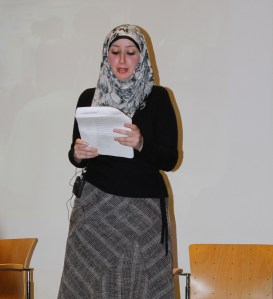
The Gaza team from left: Khaled Harara, Eman Hilles, Sameeha Olwan, Ayman Qwaider, Mohammed Ghalayini, Manar Zimmo, Alaa Shoublaq, Samah Sabawi, Mahmoud Hammad, Najwan Anbar, Alia Abu Oriban and Ayah Abubasheer.

Sameeha Olwan

Sameeha Olwan reading the part of Jomana.

From left: Mohammed Ghalayini, Ayman Qwaider and Mahmoud Hammad

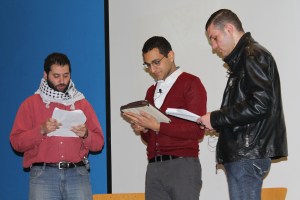
From left Mohammed Ghalayini reading the part of Rami, Ayman Qwaider reading the part of Ali and Mahmoud Hammad as Mohanad.

554355_10152424530600562_1359321734_n

Manar Zimmo reading the part of Lama.

From left:  Mahmoud Hammad, Alaa Shoublaq, Mohammed Ghalayini and Ayman Qwaider

From left:  Mahmoud Hammad as Mohanad Alaa Shoublaq as Abu Ahmed, Mohammed Ghalayini as Rami and Ayman Qwaider as Ali.

Eman Hilles

Eman Hilles was the narrator of our Tales.

Mohamad Akilah

Gaza esteemed musician Mohamad Akilah.

Najwan F. Anbar

Najwan Anbar reading the part of Um Ahmed

In Gaza Tales of a City by the Sea at Qattan Centre for the Child

FinalPoster

Israel’s Gaza Bantustan

First published on AlJazeera

Israel’s one state reality greeted us at the gates of the Gaza-Rafah crossing when we were asked by the Egyptian officer to present our Haweyah (Palestinian IDs) in order to be allowed through. It is not like we weren’t expecting this request, we knew that it would come down to this even though our Australian passports clearly showed Gaza as our place of birth we were still not considered Palestinian nationals in our own home city. Rather, we were treated like foreigners who needed an almost impossible amount of bureaucratic red tape designed to discourage the likes of us of ever thinking of visiting loved ones back home.

Allow me to explain: Since Israel’s establishment it has used the system of ID cards to differentiate between its Jewish and non-Jewish residents and citizens, a distinction needed in order to apply its apartheid discriminatory policies of separate and unequal treatment. When Israel occupied Gaza and the West Bank in 1967, its Interior Ministry began to also issue ID cards to the Palestinians in the Occupied Territories. By 1982, Israel passed the Identity Card Carrying and Displaying Act requiring all residents of Israel both inside its 1948 borders and inside the green line in the Occupied Territories, who are over 16 years of age, to carry at all times these ID cards and to present them upon request to the authorities.

Israeli citizens’ ID cards come in blue plastic casing with the Israeli Coat of Arms on the outer cover. Palestinians prior to the establishment of the Palestinian Authority had orange casings in the West Bank and red casings in the Gaza Strip both with the IDF insignia embossed on the outer cover highlighting Israel’s military control. Palestinians in the Occupied Territories who were forbidden entry into Israel’s 1948 borders had green casings.


After the establishment of the Palestinian National Authority and as part of the creation of the illusion of progress, the Palestinian National Authority was handed some limited inconsequential powers. These included issuing Palestinian residents with ID cards. A pointless exercise given that the power to issue these cards hinged on Israel’s approval, which was selectively given. Not only that, Israel continues to this day to control the Palestinian population registry and to assign the actual ID numbers provided for the Palestinian ID cards; the all-important cards required to enter Gaza and the West Bank.

Much has been written about how the system of ID cards is used as a weapon to further cement the fragmentation of the Palestinian population as it confines the Palestinians to their geographic Israeli-controlled Bantustans, forbidding Palestinians with Gaza IDs entry into the West Bank and Jerusalem and vice versa. But perhaps the worst and most insidious effect this system has is in the way it is designed to control and monitor the movement of all Palestinians and to curb the Palestinian population by denying their diaspora the right to come home even if for a short visit.

As we stood at the Rafah crossing, we were confronted with this reality. The Egyptian officer insisted that only Palestinians with the Israeli-controlled Palestinian ID cards are allowed to use this crossing. These orders are a result of an unforgivable move, one of many, that were made by the Palestinian National Authority when in 2005, Palestinian negotiators led by Mohammed Dahlan (a Fatah leader with strong links to Israel and the US) signed an agreement with Israel on movement and access from and to Gaza. One of the conditions they agreed to was restricting the use of the Rafah crossing to Palestinian ID card holders. It is hard to fathom why the Palestinian Authority would have agreed to such an inhumane condition which in reality means that Gazan residents would be cut off from loved ones in exile.

After seven hours of waiting at the Rafah border and after exhausting every connection, every phone number, every thread of hope and every possibility, we managed to make it through. Once inside Gaza, it became abundantly clear that despite Hamas’ visible presence inside the city and the endless waves of green flags, we had arrived into an Israeli controlled Bantustan. The currency used here is the new Israeli Shekel, the IDs all the residents carry are issued by the Israeli interior ministry, all births go through the Israeli national registry, the essential products are all Israeli in this captive market. As I type this to the sound of the Israeli F16 hovering in the sky above, and as I look at the sea patrolled by Israeli cruisers, I am convinced that I am now inside Israel’s one state reality in a Bantustan they call Gaza.

Samah Sabawi is a Palestinian writer and Policy Adviser to Al-Shabaka, the Palestinian policy network.  

Follow her on Twitter: @gazaheart

The Palestinian Circus: creative acts between reality and hope

Posted: December 21st, 2012 ˑ Filled under: .culture.theatre ˑ  No Comments

This post is also available in: Dutch

al.arte.magazine 

Over the last weeks, The Palestinian Circus School has been performing in Belgium in various locations, offering a show around the theme ‘Kol Saber!’ The travelling company of performers from Ramallah, Palestine differs from the traditional circus setting with the large tent and animal acts. However, classic circus acts such as acrobatics and tightrope walking do form a part of their show, albeit choreographed in a special way and embedded in a story. The young Palestinian people actually use the circus to tell their story to the world.

The Palestinian Circus School was established in 2006 by the Belgian Jessika Devlieghere and her Palestinian husband Shadi Zmorrod. The school teaches around 170 children and young people 9-27 years of age in different parts of the occupied Palestinian territories. Shadi Zmorrod is the former artistic director of the Jewish Jerusalem Circus and started the circus school when the circus refused to take in Palestinian children. The project is a form of cultural resistance against the occupation and the daily threats. The school aims to offer children a solid and safe haven where they can escape the depressing daily reality, just like a real circus family would do. A place that allows them to explore their creativity and develop social and psychological skills. An artistic world in which they can discover fun, embrace hope, create a positive self-image and learn to work in a team.

Kol Saber - © Veronique Vercheval

Kol Saber – © Veronique Vercheval

More than a school

Some of the early students became local trainers themselves in the basic techniques of acrobatics, juggling, trapeze, flower sticks, pois and clowning. They went on to tour refugee camps in the occupied territories with surprising performances. They also performed abroad, in France and Belgium. One of these trainers is Fadi Zmorrod. “I’ve never done anything like circus acts before I started. After three weeks of intensive training I was amazed at the physical capabilities I turned out to have. It’s therapy. I use it to release tension. ” Young students learning more about their culture, and how to trust others, makes the circus school more than just a school. “We went to other cities. The hardest thing I encountered were the many checkpoints, because they made me nervous. But I also learned more about my culture. We had to get rid of some old ideas like ‘men are stronger’ and ‘girls have more fun.’ For example , touching eachother is prohibited. We have to be physical but without touching eachother. The trust factor is also at play. Girls have less confidence. We learn about gender roles and empowerment. “

The youngsters needed something to look forward to in order to take life into their own hands. The circus school enables them to do just that, without having to live in constant fear. According to Noor Abu Rob, one of the young artists, growing up was difficult. “We only had the streets to live in and sometimes we couldn’t go to school because of a curfew. For me, circus is an open world. I can express myself better through the circus than through words. “

Kol Saber - © Lucia Ahmad

Kol Saber – © Lucia Ahmad

Kol Saber - © Veronique Vercheval

Kol Saber – © Veronique Vercheval

When they first performed in Belgium the shows theme was ‘Circus behind the wall’. The performance was based on the Palestinians’ daily lives, in which the notion of separation is central. The title refers to the wall that separates the Palestinian territories from Israel. The Palestinian Circus wants to teach the public about communication through juggling and clowning acts. This time around they performed their new contemporary circus production ‘Kol Saber!’. The production centers on the various realities of streetlife, a story of the ongoing challenge to escape the external power holding sway over their lives.

‘Kol Saber!’ literally means ‘Eat (the sweet fruit of) the cactus!’, but figuratively speaking ‘Eat patience!’, and tells the story of young people waiting for a change in their society. They try everything and keep believing in hope but finally have to accept the fact their lives will remain the same.

The 14 december show in the De Roma concert hall in Borgerhout was overshadowed by the death of the 17-year-old Mohammad Ziad Al-Salaymeh, one of the students of the Palestinian Circus School. He was shot and killed near a checkpoint by an IDF soldier on his birthday. Mohammad went out to buy a birthday cake and came under fire because the soldiers suspected him to be carrying a gun. Later the Israeli newspaper Haaretz reported he had been carrying a toy gun. That news devastated both performers and founders of the travelling company. Jessika Devlieghere held an emotional speech and the young artists dedicated the show to Mohammad al-Salaymeh and the many other innocent victims. It was not the first time that candles were lit. In 2008 they did the same, observing a minute’s silence. The young artists hope this is the last time.

Ahmad Abu Taleb - © Vince Buyssens

Ahmad Abu Taleb – © Vince Buyssens

Ahmad Abu Taleb (21) from Jenin has been performing in the Palestinian Circus for 4,5 years now. “For me, the circus is a way to tell my story and that of the Palestinian people in a creative way and to show it to the world. We recently lost our colleague Mohammad al-Salaymeh. No matter how many atrocities we experience, we will find the power to perform over and over again. Because for every Mohammad who dies by Israeli violence, we are performing even more passionately on stage.”

As has been said, the performance was far from a traditional circus show, but rather a profound story poetically told by means of dance and circus techniques like juggling, aerial acrobatics, balancing acts and jumps. With coats dancing for life, diverging and converging, fighting and living, in a tense context, until a mysterious coat falls from the sky and change the rules of the game. ‘Kol Saber!’ portrays the conflicting life between the bitter realities imposed by the occupation and the sweet and colorful dream of the bereaved sea.

Kol Saber - © Lucia Ahmad

Kol Saber – © Lucia Ahmad

The project gives the students a sense of dignity and is a way to prevent becoming a victim in a dehumanizing conflict, allowing them, on the contrary, to be proud to be Palestinian.

Artists: Ahmed Abu Taleb, Fadi Zmorrod, Mohammed Abu Taleb, Mohammed Abu Sakha and Noor Abu Rob
Directed by Shadi Zmorrod
Costume design: Fadila Aalouchi

More information: http://www.palcircus.ps/
Written by Malikka Bouaissa – Asma Ould Aissa

This article first appeared in al.arte.magazine 

Join Gaza Marathon: a 42-kilometre run along the coastline of the Gaza Strip.

Join us in April 2013 for the Gaza Marathon: a 42-kilometre run along the coastline of the Gaza Strip.

Organised by the UN Relief and Works Agency for Palestine Refugees (UNRWA), the marathon will host runners from the US, Europe and elsewhere, as well as the young people of Gaza.

Funds will go towards a special programme of fun summer activities for the children of Gaza, many of whom have been traumatised by the recent conflict.

Sign up today at unrwa.org/gazamarathon.