Theatre review: Tales of a City by the Sea captures drama of star-crossed lovers amid Gaza conflict

Reviewed by Rebecca Harkins-Cross

The Sydney Morning Herald

THEATRE
TALES OF A CITY BY THE SEA ★★★Samah Sabawi
La Mama Courthouse, until November 23

Star-crossed lovers Jomana (Nicole Chamoun) and Rami (Osamah Sami) face a hopeless impasse. The Palestinian cause brings together the Gazan journalist and the American-born Palestinian doctor, but is also what threatens to keep them apart.

Like recent Palestinian film Omar (2013), many artists are exploring the current state of the conflict through the frame of divided young love. This is a generation who’ve grown up under various states of occupation, with internet access allowing them to interact with the world beyond their borders.

Some of playwright Samah Sabawi’s poetry is heavy-handed, but there are raw emotions propelling the drama. Director Lech Mackiewicz extracts moving performances from a large cast, with singer Aseel Tayah’s wistful dirge echoing throughout.

Advertisement
Sabawi’s nuanced exploration of the myriad ways the occupation affects Palestinians at home and abroad could only be drawn from first-hand experiences. Those who’ve managed to escape find themselves suspended between two worlds, while for those who stay their roots are one of the only things they have left.

Set during the 2008 Gaza war, the play speaks to this year’s hostilities just as strongly. Sabawi’s focus extends beyond the political to people battling for normalcy – and managing to find humour – when the future is so uncertain. Funerals and marriages become a part of daily life.

Jomana finds solace from documenting the bloodshed.

“One more dead baby and the world will rise,” she prays.

Despite its flaws, this gripping play is an act of resistance that implores its audience to take heed.

Read more: http://www.smh.com.au/entertainment/theatre/theatre-review-tales-of-a-city-by-the-sea-captures-drama-of-starcrossed-lovers-amid-gaza-conflict-20141113-11lmx3.html#ixzz3L5vK5tXa

City By The Sea – a poem by Stuart Rees inspired by the play Tales of a City by the Sea

I was compelled by Samah’s Tales of a City by the Sea – so beautifully acted, so stunningly presented – to scribble this poem as tribute and reminder of a piercing piece of history placed on stage. The tenacity and courage of the people of Gaza stands in total contrast to the cruelties meted out by successive Israeli governments. Samah reminds us: the sea is the people’s salve, their loving a means of survival and a reminder to all who will ponder these ‘Tales’ to demand justice for all Palestinians.

City By The Sea

Transfusion beyond bombings

-whose noise as bombers dive,

to fulfil their bloody missions –

helps lovers stay alive,

tied up in their dilemmas

to flee, or risk and stay,

to kiss through every moment,

their adrenalin to say,

‘The ocean always tells us

of the salve that comes from thee,

tho’ waves may mutter only

the hope they give to me.

Life can remind of kindness

not death’s brutality,

lives may be lost in buildings,

yet generosity

still comes from endless motion,

-the sight, the sound, the sea –

which nurtures every struggle,

and is…..

life’s only certainty.’

Stuart Rees is Emeritus Professor, Australian academic and author. He is Director of the Sydney Peace Foundation and Emeritus Professor at the Centre for Peace and Conflict Studies at the University of Sydney in Australia.

Audio: In conversation with Tales of a City by the Sea director Lech Mackiewicz and actress Wahibe Moussa

A fantastic interview with Lech Mackiewicz and Wahibe Moussa about why they chose to be involved with the play Tales of a City by the Sea and what they hope this play will accomplish.  It offers a wonderful insight into the role of theatre in building cultural bridges and telling the stories that need to be told.

With thanks to Jan Bartlett and 3CR radio.

Buy Tickets for Melbourne Production.

Jon Faine interviews Samah Sabawi about her upcoming play Tales of a City by the Sea

Jon Faine’s conversation hour with playwright Samah Sabawi, actor Miriam Margolyes and novelist Ceridwen Dovey

Buy Tickets for Melbourne Production

The dream and the reality of staging Palestine

Excerpt from interview:

“The recent total devastation of Gaza made putting on this play all the more important for us in the West Bank and in Melbourne. What happened in Gaza a couple of months ago is something that is far worst than ever before.   It was an attempt at the destruction of life in a way that Palestinians haven’t experienced since 1948, since the original ethnic cleansing of Palestine began….We were casting just toward the end of that and it was surreal and sad and for me it was heartbreaking because I really wanted to bring this brand of art to Gaza…it was my love letter to Gaza in a way…I went there two years ago and we staged a reading and I vowed that the play will premier in Gaza before anywhere else but I can see that this dream will have to be put on hold for now…”

Click on video below to hear the full interview.

Buy Tickets for Melbourne Performances

مسرحية حكايات مدينة على البحر SBS Arabic Radio with Tales of a City by the Sea

مسرحية حكايات مدينة على البحر تبدأ في ملبورن في الثاني عشر من تشرين الثاني نوفمبر. المسرحية عبارة عن قصة حب وانفصال وستعرض على خشبة مسرحين في اليوم ذاته. على خشبة مسرح لاماما في ملبورن، ومسرح الرواد في مخيم عايدة في الضفة الغربية.

كاتبة المسرحية هي الكاتبة والشاعرة سماح السبعاوي، وقد استضفناها في استديوهات الأس بي سي مع اثنين من فريق العمل. استمعوا هنا إلى سماح السبعاوي، والممثلة نيكول شمعون والممثل أسامة سامي.

The Age: Palestinian Play Tales of a city by the Sea thwarted by real-life violence

By Annabel Ross

There is some bitter irony in the fact that the plan to premiere a Palestinian play in three different cities was thwarted by the very war it speaks of. Palestinian-Australian writer Samah Sabawi wanted Tales of the City and the Sea to debut in Australia and the Palestinian territories simultaneously. “The plan was that it would open in the West Bank, Gaza and Melbourne at the same time and in a way connect the Palestinians in the West Bank to the Palestinians in Gaza,” she says. “Unfortunately, the time we started casting and putting together the production team was when Gaza was under heavy bombardment.” That was in July, at the height of the recent conflict. Read more: http://www.smh.com.au/entertainment/theatre/palestinian-play-tales-of-the-city-and-the-sea-thwarted-by-reallife-violence-20141028-11cjn0.html#ixzz3HPpWg1ia

Short video: La Mama Artistic Director Liz Jones on staging Palestinian theatre in Australia

Tales of a City by the Sea, a Palestinian story of love, separation and beautiful resistance will be staged in Melbourne November 12 – November 23 at La Mama.  Here is why:

TIMES:

NOVEMBER 12 – NOVEMBER 23
Wednesday 6.30pm
Thursday 7.30pm
Friday 7.30pm
Saturday 7.30pm
Sunday 4pm

Venue:

La Mama Courthouse
349 Drummond Street Carlton
03 9347 6948

TICKETS

Full $25
Concession $15
Phone bookings: 03 9347 6142

BUY TICKETS

Tickets can be booked up until 4pm on the day of the performance, otherwise try your luck at the door.

Please allow plenty of time to arrive at our venues, as we have a no latecomers policy.

Introducing our Melbourne Production Cast and Crew

The Creatives

Playwright and producer Samah Sabawi

samah-3

Samah Sabawi is a Palestinian-Canadian-Australian writer and commentator.  She has travelled the world and lived in its far corners, yet always felt as though she was still trapped in her place of birth Gaza.  The war torn besieged and isolated strip has shaped her understanding of her identity and her humanity.  So what else could Sabawi do but to indulge in Gaza’s overwhelming presence and to succumb to tell the stories.

Samah Sabawi is co-author of the book Journey to Peace in Palestine and writer and producer of the plays Cries from the Land and Three Wishes, both were successfully staged in Canada in 2003 and 2008. Sabawi’s writings have appeared in various media outlets including AlJazeera English, AlAhram, The Globe and Mail, The Age, The Sydney Morning Herald and many others. Her poetry has been featured in various magazines and books, most recently in an anthology published by West End Press titled With Our Eyes Wide Open: Poems of the New American Century. Samah Sabawi is currently co-editing an anthology of plays for the Playwrights Canada Press, Canada’s major publisher and distributor of Canadian drama. Her recent play Tales of a City by the Sea will be published as part of the anthology in early 2016.

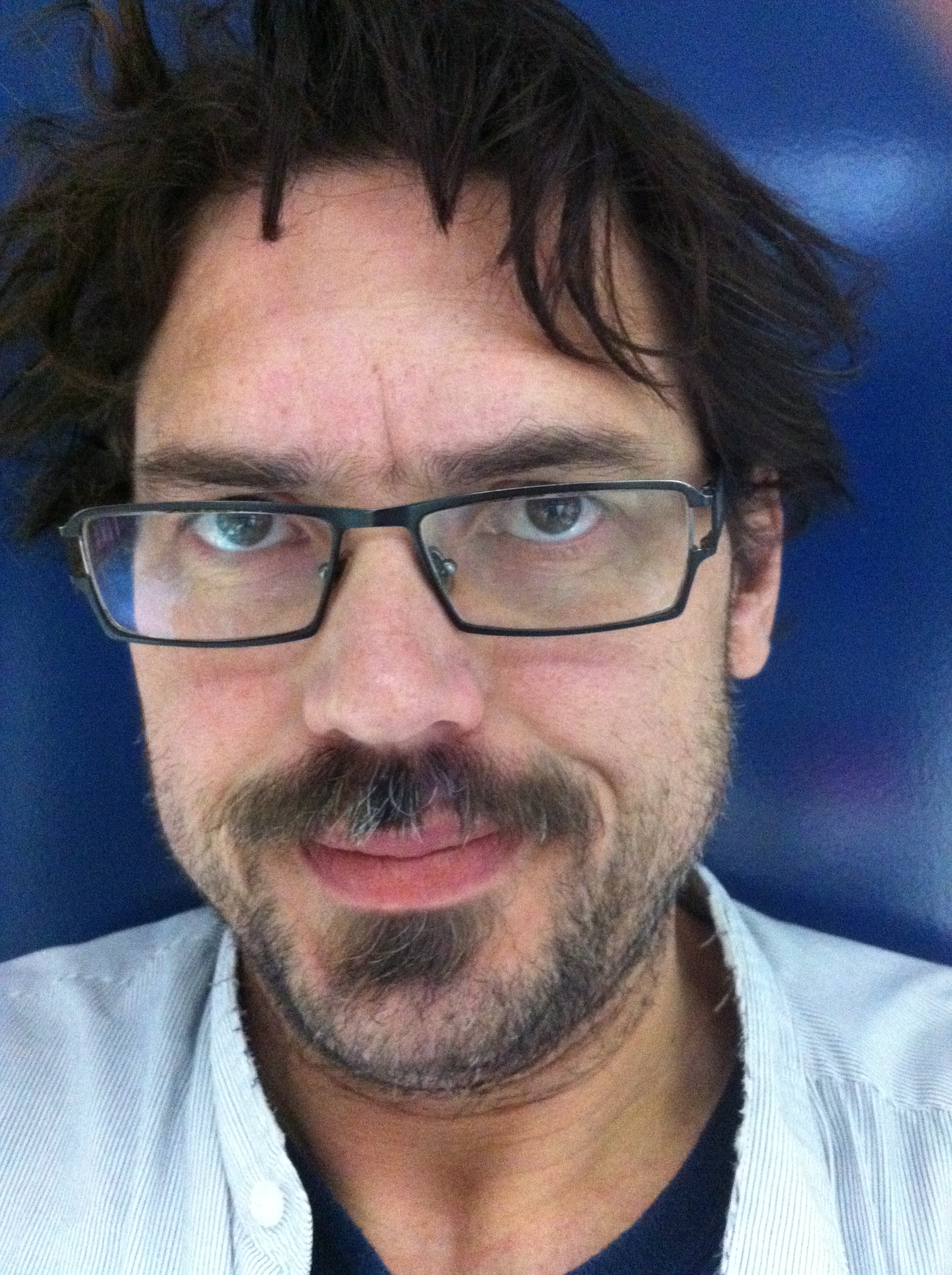
Co-producer and actor Majid Shokor

1918277_101418606569621_6166305_n

Majid has been acting for over 25 years. He also directed whilst teaching drama in Lebanon for four years and has written his own works. He has won many awards in his home country of Iraq and has been a member of the Iraqi National Theatre Company and a long-time member of the Iraqi Theatre Artists Syndicate.

Since arriving in Australia in September 2001, Majid has appeared in many plays in Sydney, Melbourne and Adelaide including, Kan Yama Kan directed by Robin Laurie. Getting in directed by Jean-Pierre Mignon, Subclass26A  directed by Bagryana Popov at 45 Downstaires for which he got Green Room Best Actor Award nomination 2005, Carrying Shoes Into The Unknown at LaMam, Homebody /Kabul by Tony Kushner directed by Chris Bendal , Theatre@ risk company and  The Cove season, 8 short plays by Daniel Keen and directed by Matt Scholton presented at the Dog Theatre, for which he got another Green Room Best Actor Award nomination 2009.

Majid was also seen at Belvoir St Theatre in The Cool Room which was presented by Performing Lines and In Our Name, a play Written and directed by Nigel Jamieson and was presented by company B.  His screen credits include a guest role in City Homicide and an actor and cultural consultant in the feature film Lucky Miles.

Majid holds a Master degree in Community Cultural Development with honor degree from VCA / Melbourne University.

Director Lech Mackiewicz

59_lm1

Lech directed theatre in Poland, Korea, Japan and Australia, so his understanding of cross-cultural undertaking is based on first hand experience. In Japan Lech worked with the Japanese actors and creatives for Suzuki Company Of Toga and for ACM Mito. His work was seen at a number of international theatre festivals in Japan: Nagoya, Tokyo, Toga. Last year Lech worked on a bilingual co-production of Cho Cho by Daniel Keene for the National China Theatre and Melbourne Arts Centre. In Australia Lech co-founded Auto Da Fe Theatre Company with 2 NIDA graduates Justin Monjo and Jaime Robertson in 1987. In the 1990ies Lech received 3 individual grants from the Australia Council for Arts. He is also the 1991 winner of a New South Wales Performing Arts Scholarship.

Graduate of the National State Academy of Theatre in Cracow (Poland) in 1983, and from UTS Sydney in 1987. Directing secondment with the Moscow Arts Theatre 1991.  His directing credits include: KING LEAR for Playbox ( Melbourne) touring nationally and to Japan and Korea, THE HOUR BEFORE MY BROTHER DIES for Jaracza Theatre (Poland), KRAPP’S LAST TAPE for Auto Da Fe Theatre Co. (Poland, Australia, Japan) FELLINIADA (Belvoir. St. Theatre). SO CALLED K. for Mito Acting Company ( Japan), BECKETT IN CIRCLES for Suzuki Company of Toga (SCOT; Japan), AN OAK TREE for Teatr Wegierki (Poland), NaGL for Teatr Auto Da Fe ( Sydney) DITTO.A STORY ( La Mama Melbourne), KAFKA TANCZY for Teatr Zydowski (Warsaw) and most recently EVERYMAN & THE POLE DANCERS at Metanoia Theatre (Melbourne).

Given his experience as an actor and director who has lived and worked in Europe, Japan and Australia, Lech’s theatre-writing displays the space required for collaborative expression and the ambiguity to allow diverse cultural readings. “What marks this work as arresting and worth attending is the cultural prism that the writer and director, Lech Mackiewicz, “a Polish artist immigrant”, brings to this exercise of his view of living in Australia in 2010. At least I found it so – a provocative experience to take on board on several different levels: Content and style at least two of those levels, consciously (in time the subconscious, perhaps). Kevin Jackson’s Theatre Diary. On NaGL

Assistant Director Izabella Mackiewicz

photo-2

Izabella studied acting and theatre at the National Academy Of Theatre in Cracow (Poland) and UNSW in Sydney (Australia).

She collaborated with Lech Mackiewicz on a number of projects. Her most recent theatre credits include: NaGL (Auto Da Fe Theatre ;Sydney), Milobojcy (Teatr Nowy Zabrze; Poland), Ditto (La Mama; Melbourne), The Author ( Teatr Siemaszkowej Rzeszow; Poland), Skierniewicer ( Poland). She also appeared in some feature films and translated plays for theatre from English to Polish.

The Cast

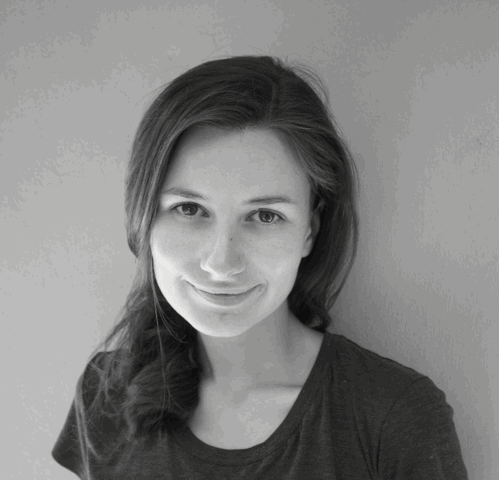
Nicole Chamoun

headshot

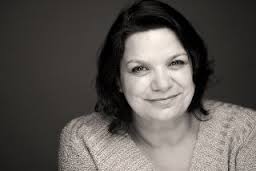
Nicole is thrilled to be making her theatre debut here at La Mama in this beautiful production.  Since starring as ‘Layla’, in the SBS series ‘kick’ (2007), Nicole has gone on to appear in many television series such as ‘city homicide’ & feature films Including ’10 terrorists’ (2012) & ‘Last Dance’ (2013). Stay tuned to see Nicole in an upcoming feature film, titled ‘Be Less Beautiful’, starring alongside the talented Osamah Sami. Nicole is currently studying at The Melbourne Actors Lab under the guidance of Peter Kalos.

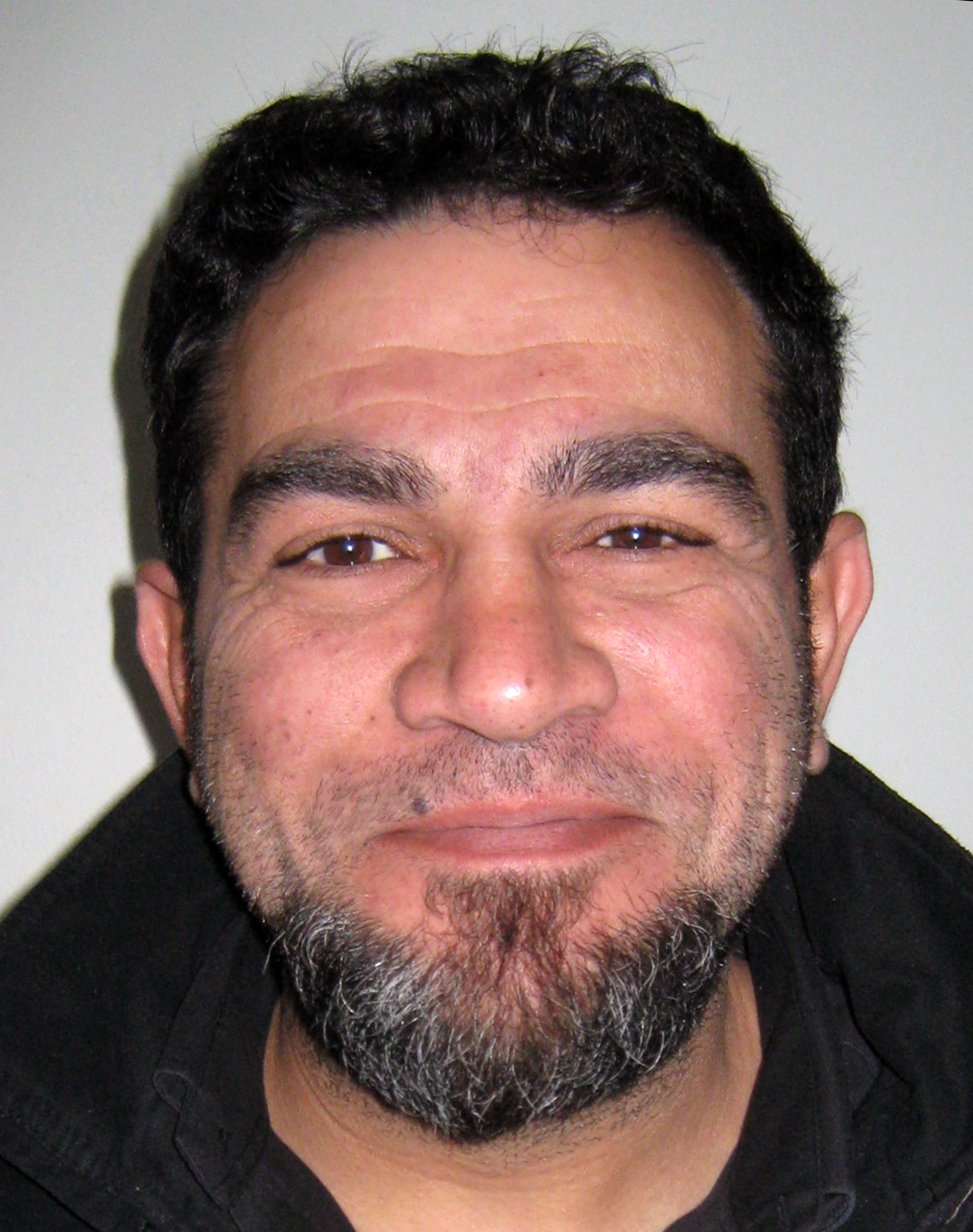
Osamah Sami

_WP_6313-2

Osamah is a failed cricketer, struggling actor–writer–director and floundering comedian. Born in war-torn Iran to half-Kurdish, half-Iraqi parents and escaping to call Australia home have moulded him into a confused soul. It is a miracle he’s still entrusted to perform on stage. Credits include Sinners, Long Day’s Dying, Blackbox 149, Two Executioners (La Mamma); Baghdad Wedding (Belvoir St.); The Container; Homebody/Kabul (Big West) and Saddam the Musical, which saw him deported from the U.S. (his name, ‘Osama’ and barracking for the ‘Bombers’ were contributing factors).

He played lead roles in films Saved (opposite Claudia Karvan) and 10 Terrorists! TV shows include Kick, City Homicide, East West 101, Sea Patrol & Rush. Contrary to popular belief, he has played a terrorist only twice. Osamah also created an 8-episode sitcom for SBS (Baghdad to the Burbs) and has written a vague number of plays and short films. His memoir ‘Good Muslim Boy’, published by Hardie Grants, will be released in May 2015. He is currently working on two feature films and being a better father.

Emily Coupe

097A4862-Print-1

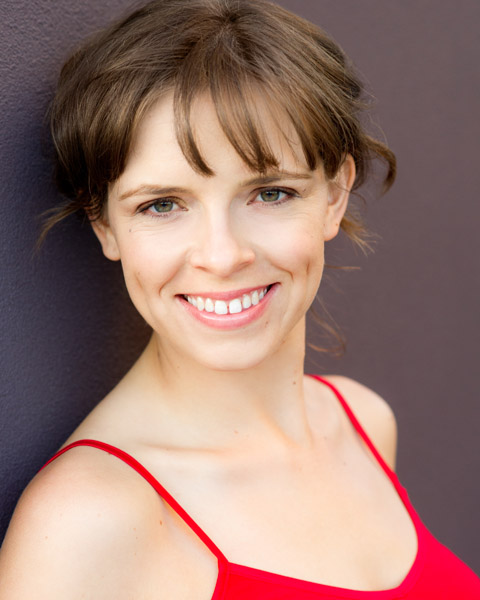
Emily was born and raised in Melbourne and has been passionate about acting and singing from a young age. Her first theatre experience was in primary school – performing in both the schools improvisational group and choir ensemble – which sparked her passion for the arts. Since then she has continued her training at Musical Theatre school Showfit, Melbourne Actors Lab and The Rehearsal Room, and has appeared in various T.V shows such as Offspring, web-series, short-films, adverts and feature films around Melbourne. She is also recording an album of original music with producer Lee Bradshaw, which she is excited to release later this year. Emily is thrilled to be joining the cast of The Tales Of A City By The Sea this season, and looks forward to sharing this story with you all.

Wahibe Moussa

images

Wahibe is a performance-maker, writer and Green-Room award winning actor. She has gained respect as a Cultural/Language Consultant in theatre and television.  She creates short fiction, poetry and performance where the personal is political, exploring the exchange of power within human relationships. Wahibe’s practice is informed by her own experiences as a migrant child, her collaborations with Refugee Artists and a commitment to understanding Indigenous performance and story making practices. Her solo performances and writing speaks to contemporary social experience, utilising spoken word and movement with audio-visual and sculptural elements: TIME PIECE (Immigration Museum 2002) TOUCH(DON’T)TOUCH (2000), SOME KIND OF LOVE (2010), BREATH OF GOD (2012).

As an actor Wahibe has been seen on television and in independent theatre productions. In 2007, Wahibe received the Green Room Award for Female Actor in an Independent Production, for her role as Mahala in Theatre @ Risk’s 2007 production of Tony Kushner‘s Homebody/Kabul.

As a Community Artist, Wahibe worked collaboratively in Community Theatre, Visual Art and Writing Projects in Melbourne and Sydney. Projects include THE TORCH (on its Shepparton tour in 2001), which led to drama and leadership workshops for young Australian Muslim women In Shepparton and Melbourne. Wahibe toured Australian Capitals with Medicen Sans Frontiere as a Storyteller, retelling the stories of six Refugees from Africa, Chechnya, Eastern Europe and the Middle East. BETWEEN MEMORY AND HOPE: TEARS FOR THE FUTURE, The Iraqi Women’s Quilt and Story Project (2003-2005) where women shared their experiences under Saddam Hussein and then at the hands of the Australian Government, in textile art creating panels for 5 Quilts and a companion book. These quilts have been constantly touring Australian cities and towns ever since.

In 2009 Wahibe founded “Writer’s Nest“, for writers interested in exploring new territories and expanding known ground. She completed her Master of Writing for Performance 2012. In 2013 she received a Hot Desk Fellowship From the Wheeler Centre spending ten weeks writing and researching a new performance piece, In The Garden. Currently she is one of ten Dramaturgy Interns, a Playwriting Australia Fellowship initiative with MTC. Wahibe continues her online collaboratIon with German sound artist, Somer Abbas Yacoub.

Aseel Tayah

aseel

Aseel is a vocalist and installation artists. She considers herself a non-traditional Arab Muslim girl. Born in Jerusalem she was raised a proud Palestinian by her parents in Qalanswa, Palestine. Torn between sustaining her identity and being forced to assimilate by a suppressive Israeli occupation of Palestine Aseel was forced to live the Palestinian Israeli conflict in her daily life. The result was that Aseel grew stronger, wanting to drive the changes she seeks to see in the world. Aseel seeks education through Art. She graduateed from the collage of arts with honour. Her art focuses on women rights, society & national identity.

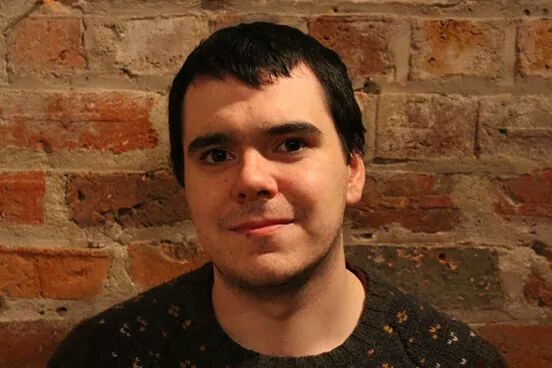
Reece Vella

Reece Vella

Reece Graduated from The Actors College of Theatre and TV in Sydney in 2010, Reece Vella has been acting professionally for the past four years, gaining experience while working with the likes of Lech Machiewicz, Lex Marinos and Mario Philip Azzopardi. With a passion for new work his latest endeavors have been the world premier of “Il- Kappillan ta’ Malta” in July 2014 performed in Malta in Maltese, based on the English best selling novel by Nicholas Monsarrat and most recently performing in “Everyman and the Pole Dancers” in October 2014 at Metanoia Theatre under the Auto Da Fe company. Reece is delighted to be performing for the second time at La Mama since he holds this place close to his heart for its unquantifiable artistic and historical Australian value.

Ubaldino Mantelli

Ubaldino-01

Ubaldino is a relative newcomer to acting and performing. Since 2009, he has played major roles in community theatre in the Geelong region (Oscar Wilde in Kaufman’s Gross Indecency: The Three Trials of Oscar Wilde, ‘Mario’ in Miller’s A View From The Bridge, ‘Cripple Billy’ in McDonagh’s The Cripple of Inishmaan, ‘The Actor’ in Mallatratt’s The Woman In Black, Dr Treves in The Elephant Man, ‘Bill Sykes’ in Oliver!). He has performed in several plays written and directed by Doug Mann for the National Trust and has undergone regular workshops and training, including the VCA’s Acting Studio 12. Ubaldino has been a producer and presenter on community radio and recently performed in Richard Kakol’s Vision Australia radio play, The Infinite Hotel. In 2013, Ubaldino performed in Daylight Savings, an ensemble-devised production led by James Pratt at Courthouse Arts. Ubaldino is the tallest member of his family band, The Mantelli Five.

Cara Whitehouse

CaraWhitehouse

Cara is an actor, singer and voice teacher. Following graduation of her BA (Hons) Acting at LASALLE College of the Arts in Singapore she worked in children’s puppetry theatre and at the Singapore Arts Festival. Cara is a certified Fitzmaurice Voicework™ teacher and continues training in Knight-Thompson Speechwork this December in New York. She also continues her acting training at the Howard Fine Studio. Favourite credits include: Medea, Elektra, Macbeth, Conference of the Birds, Visible Cities, One More Year and The Wonderful World of Dissocia. Cara is excited to be making her La Mama debut in such an important, currently relevant story.

Production Crew

Set Designer Lara Week

Lara

Lara is a Melbourne-based producer and designer for performance. Her background includes co-creating monthly community music event Deja in her home city of Sydney; leading play-building workshops for children with Galli Theatre, Berlin; making costumes for a children’s program in the Israeli Opera; and working with children in a youth club for refugees in Tel Aviv. Since 2011, Lara has been associate producer for Tribal Soul Arts, producing community programs and original performances in Zimbabwe, Mozambique, the Netherlands, UK, and Australia. In 2013, Lara completed her PG Dip in Performance Creation (Design) at the Victorian College of the Arts. Her design credits include: The Conference of the Birds (Centre for Cultural Partnerships), The Love of Don Perlimplín and Belisa in the Garden (VCA School of Drama), A Feat Incomplete (Old 505 Theatre), and Just Looking (VCA School of Dance). She is dedicated to creating spaces where people with different skills and perspectives can share ideas and produce work together.

Lighting Designer Shane Grant

me  7.11

Shane has been Audio Visual Technician for St Kevins College for the past 8 years. Prior to that he was Production Manager with Strange Fruit for 6 years and Technical Manager at Gasworks Theatre for 4 years. Shane is an accomplished lighting designer having worked extensively with companies like Ranters Theatre, The Torch Project, NYID and many others. Shane has a BA Dramatic Arts (Production) VCA from 1994. Shane is currently a company director of Metanoia Theatre and the technical manager of the mechanics institute theatre in Brunswick.

Sound Designer Khaled Sabsabi

Khaled Sabsabi

Khaled works across art mediums, geographical borders and cultures to create immersive and engaging media based experiences. I’m a socially-engaged artist who specialises in multimedia and site-specific installations that often involve people on the margins of society. I have worked in detention centres, schools, prisons, refugee camps, settlements, hospitals and youth centres, in the Australian and broader international context. I’m interested in the individual and what defines humans, our experiences, anxieties and uncertainties. I make work that questions; rationales and complexities of nationhood and identity. I also make work that is in continual transfer from the physical to the philosophical, to interconnect the interrelatedness and cycles of life. www.peacefender.com

Sound Mixer Max Schollar-Root

max photo

Max has his roots in The Australian Theatre for Young People and the NSW Performing Arts Unit State Drama Ensemble, Max found his passion in musical performance and composition while studying at the Sydney Conservatorium of Music. He has since played in many ensembles, currently works as a bandleader, tours nationally, and has produced six full-length albums. Recently he has been completing training to become a Registered Music Therapist at the University of Melbourne. Max is increasingly involved in multi-modal performance projects combining live music, technology, and dance, and is presenting this work with his group, Ungus Ungus Ungus, at music and arts festivals across Australia.

Stage Manager James O’Donoghue

IMG_37257467035939

James is a theatre maker and designer in his final year Performing Arts at Monash University. In 2013 James undertook a technical internship at Monash Uni Student Theatre and designed multiple productions including The Threepenny Opera, Psycho Beach Party and a contemporary dance piece In The Fires, We Weep. Further work includes stage management of Boy Out of the Country presented by Larrikin Ensemble Theatre at 45 Downstairs, stage management of Little Dances at La Mama Theatre, Stage Management for Auto De Fa’s Ditto, design of The Bloom’s Ernest, lighting secondment to Emma Valente on The Rabble’s Room of Regret, design of A Midsummer Night’s Dream by the Monash Shakespeare Compay, assistant design for Attic Erattic’s The City They Burned and assistant design for Passion presented at the Arts Centre this month.

Assistant Stage Manager Nada Mustafa

me-2

Nada is a Palestinian Australian, Having completed her Bachelor in Filmmaking, she went on to volunteer with Channel 31 as a floor manager for their Youth Network…she then progressed to complete an internship with Happening Films as their Production Assistant for their short film Golden Girl. She continued further study in Event Management and Public relations and continued to gain skills voluntarily as a 3rd Assistant Director for short films under Shekat Productions and has also voluntarily assisted in the Melbourne International Film Festival and Tropfest. She has organised small knit events and recently travelled to Palestine where she got to witness firsthand a slither of the daily Palestinian struggle. Upon her arrival back to Australia with her passion for all things creative and Palestine she has joined us as Assistant Stage Manager in her first role in the theatre industry that she can now add to her growing list of skills.

Photographer/videographer Ahmad Sabra

ahmad sabra batman

Ahmad is an Australian Muslim Lebanese multi award winning international photographer. At the age of 5 Ahmad lost his eyesight in a tragic tractor plow accident. In what at first was considered a cruel joke, a stranger gave Ahmad a camera and a roll of film. Thinking it was a gun, Ahmad would squeal and point the camera at anyone that approached. Gradually his eyesight returned and he has continued to use the camera until today but with less squealing and sharper results. ” For Ahmad’s real bio please visit his website at Www.sabraimagery.com.au

Buy Tickets 

Palestinian Theatre: a casualty of war and a tool of resistance

The Gaza production of our Palestinian love story Tales of a City by the Sea which is soon be staged in Melbourne and in the West Bank, has fallen causality to Israel’s most recent war.

The play, which was set to premier in Gaza, the West Bank and Melbourne at the same time this November explores Palestinian life and love under siege and against the backdrop of Israel’s assault on Gaza in 2008-09.   Never did we imagine that we would be staging the play at a time when Gaza has just faced a far more brutal assault that has reduced more than half of the city into rubble and has caused so many deaths and injuries.

Our Gaza team, who were set to begin rehearsals this month, have suffered the loss of loved ones, the total destruction of their beloved neighborhoods and the absolute terror of 50 days of constant and indiscriminate bombardment. The situation in Gaza today is far worst than ever before.

Unfortunately, given the widespread devastation the city has been left with, the psychological trauma the people are reeling from and the inadequacy of even the most basic of infrastructure, the staging of the play in Gaza has been postponed.

In Melbourne as in the West Bank, the production of this play has become more important than ever. Both at the La Mama theatre in Melbourne and at the Alrowwad Cultural and Theatre Society in Aida Refugee Camp in the West Bank, we are now determined to bring the tales of the people of Gaza to life by using theatre as a means of raising awareness and encouraging ‘beautiful resistance’, an expression coined by Alrowwad’s director Abdelfattah Abusrour.

So with heavy hearts we will continue this project without our Gaza partners. This defiant old city by the sea Gaza deserves to have its theatre; its artists deserve to have space for their creativity and its people deserve to have normal lives. But none of that seems to be possible in the face of the ongoing military occupation, the siege, the bombardment and with the complicity of a silent world.

As we move forward with our productions in Melbourne and in the West Bank, we would like to dedicate our efforts to raising awareness about the plight of the people in Gaza.  We hope we can count on your continued support.

Auditions / Theatre / Melbourne / Tales of a City by the Sea


We are looking for actors for the following roles:

Jomana female mid 30s

Lama female early 20s

Rami male late 30s, must be able to put on an American accent

Ali male mid 20s

Um Ahmad plus extra roles – female no other specific requirements


Key Dates


(Note new extended deadline for expression of interest)

August 13  – deadline for expressions of interest

August 16th & 17th script reading and workshop – this will be part of the auditioning process.

October 3rd – 12th  and November 1st -10th  every day full rehearsals can be flexible but must discuss with Lech

November 11 Opening night

Play runs for two weeks.


To apply please email your photo and a short bio by August 15th

Email: play3wishes@gmail.com

For information about this project visit our website www.talesofacitybythesea.com

Email from Gaza: Tales that must be told

Friends, this week our eyes were glued to our laptops watching in disbelief yet another horrible attack on the people of Gaza. We worried about our friends, partners and loved ones.  Within theTales of a City by the Sea production team we worried about our partners in Gaza, our director Ali Abu Yassin and our representative in Gaza, Aya El-Zinati. Aya is a young dynamic and talented film maker and journalist who is the epitome of the human spirit we try to convey in our play. Before the war broke out, she promised to make a new video for our project. Imagine our surprise when she sent this email yesterday with a link to the video she completed while listening to the sounds of the falling bombs outside her window. With her permission, we are proud to share her email as it offers a deep insight into life in Gaza.

Email from Aya

How are you?

I imagine this is not the right time to even talk about this but I know I have work to do. True, I’ve only slept two hours in the last three days, and I’ve been away from home most of the time but I have been thinking of you. I’ve been wondering how can I produce the video (Trailer for Tales of a City by the Sea) and what if something happens to me and I (die) before finishing it.

So, every day at dawn I try to do more edits and I don’t know but I hope this time you will like it. Please believe me I’ve tried my best to do it better than the first cut. If you don’t like it and we remain alive I will do a better one for you.

What is important is that I want to tell you a few stories we hear about the martyrs in Gaza. I want to tell you so you know what Gaza love stories are like in reality…in war… in these conditions.

On the first day when 8 people were killed, one of them was from the Qassam brigade. His name was Abdlerahman AlZamly. He was engaged to a lady, maybe you’ve seen her in some of the photos that went viral as she was saying goodbye to him. They were engaged for a long time and couldn’t get married because they were waiting for the Rafah crossing to open and for cement to come into Gaza so they can finish building their house. All they needed was one ton of cement. Of course there were no crossings open and even if they were to open and if cement came in, they may not have afforded it because it would have been five times its actual worth.

Yesterday, the Kaware family was martyred in Khan Yunis. Their house was bombed. Eight members of the family were killed and neighbours injured some have serious injuries. When I went to report it I almost had a breakdown. I told the photographer to take photos. My stomach turned. But I tried to be strong…to be normal.

Yesterday a very young man Fakhr AlAjoory was martyred on his motorcycle and the scene was horrific. Before he was martyred he wrote a status on his Facebook: ‘when I die, some will mourn me, some will feel relieved, some will remember me forever, some wont care, but that’s o.k. it is enough for me to be going to a better place’.

Last night they bombed the Hamad family. The family was sitting in their garden drinking coffee at night. The missile landed suddenly and the problem is the whole family died except for the youngest child, 5 years old, he is now orphaned and with no one left to take care of him.

My father is a maintenance engineer at the hospital and because of the emergency situation there he doesn’t come home much. I try as much as possible to check on my mom at home in between my work shifts. Anyway, as I was walking to our house, I saw lots of nervous people in the street, some were running it turned out the neighbours were told to evacuate their homes because it will be bombed in ten minutes. I ran to my mother and told her to hurry up and leave. I told her they’re bombing the house next door. The problem is if a missile lands next door our entire house will be destroyed. I kept begging her to leave but she insisted on staying. She said she would never leave her home. I kept begging there was no time…I stayed with her preferring to die with her than to live and mourn her death. Can you believe the missile landed but did not explode? The authorities came and they carried it away. So we’re still alive.

There is no safe place in Gaza at all. Every place is a target. This means Israel is bankrupt and has no list of targets so it just bombs sporadically at civilian structures. Despite it all, the poor people of Gaza still go out into the street, they buy food for Ramadan, they make kenafah and katayef for desert and they try to live the spirit of the holy month.

What upsets me the most is that the situation in this city has become so painful. There are many who don’t have enough to buy food. And on top of that, there is war and destruction. Many live on handouts or borrowed money. Some people built their homes from borrowed money only to see their homes destroyed and with their home gone, so goes everything else they have. No one seems to understand the depth of our pain. Is it not enough we’re losing ourselves, losing our lives, losing our future, and outside, the rest of the world carries slogans ‘Gaza under attack’ or ‘Gaza under fire’ but listen first about what is really happening in Gaza. Some people even post the wrong photos from Syria or from Iraq this made the international media discredit what’s really happening here and this played to Israel’s advantage. But believe me what happened here in the past three days is a massacre.

What also really upset me and frustrates me is that no one is telling our stories. Our real human stories. They talk about us as enemies or they reduce us to numbers and statistics.

I am sorry I’ve given you a headache with my rant. But I really wanted to talk to you and tell you our stories.

I’ve been in Gaza for nine years now and in that time I’ve lived through three wars. Each war has many stories. If I don’t die in this war, I will write a book about those three wars….hahaha…I remember how innocent I was when I came here and how this place made me a human being. Seriously. I think as much as I am tired of being in this place, it has given me life.

All my friends outside Gaza call me and message me. They are worried this time I will get killed. One friend said ‘Promise me Aya you will not die. If you do I will be very upset with you’. They say if you need anything … I said yes…I’ve ran out of coal for my water pipe…I can’t smoke sheesha now. hahaha….:)

Pray for me.

Here is the video.

https://www.youtube.com/watch?v=83jFZaF9owc

In Video: Gaza actors deliver message to the world through theatre

La Mama Artistic Director on the importance of staging Palestinian theatre in Australia

Premiering November 11, 2014Tales of a City by the Sea, a Palestinian story of love and separation will be brought to life on three different stages in three cities, in two languages (Arabic and English) within three different artistic interpretations. This is not just a play, it is an act of beautiful resistance.

Tales of a City by the Sea will be staged by La Mama in Melbourne Australia, AlRowwad theatre in Aida refugee camp in the West Bank and by Ashtar theatre in Gaza city.

Please help us make this dream possible.

Fundraising for the Palestinian productions is done in partnership with  Olive Kids

btn_donateCC_LG

All donations from this campaign will be used for the Palestinian productions in Gaza and in the West Bank. Any surplus proceeds from the Palestinian productions will be used to sponsor youth projects in Palestine, including literature award for youth writers and workshops to promote freedom of expression through art. 

Synopsis Tales of a City by the Sea is a unique and poetic journey into the lives of ordinary people in the besieged Gaza strip prior to, during and after its bombardment during the winter of 2008.  Jomana, a Palestinian woman who lives in the Shati (beach) refugee camp in Gaza falls in love with Rami, an American born Palestinian doctor and activist who arrives on the first Free Gaza boats in 2008. Their love is met with many challenges forcing Rami to make incredible decisions the least of which is to take a dangerous journey through the underground tunnels that connect Gaza to Egypt.  Although on the surface this love story appears to explore the relationship between diaspora Palestinians and Palestinians under occupation, there is a broader and more universal theme that emerges – one of human survival and tenacity.  Tales of a City by the Sea avoids political pitfalls, ideological agendas and clichés by focusing on the human story of the people in Gaza. Although the play’s characters are fictional, the script is based on real life events and is a product of a collection of real stories the author Samah Sabawi and her family have experienced during the events of the past several years. Sabawi has written most of the poetry in the play during the three-week bombardment of Gaza in 2008/2009.

About the playwright Samah Sabawi is a Palestinian-Canadian-Australian writer, commentator and playwright.  She has travelled the world and lived in its far corners, yet always felt as though she was still trapped in her place of birth Gaza.  The war torn besieged and isolated strip has  shaped her understanding of her identity and her humanity.  So what else could Sabawi do but to indulge in Gaza’s overwhelming presence and to succumb to tell the stories of her loved ones back home.  Her most recent play Tales of a City by the Sea is dedicated to them and to all of those who still manage to have faith and hope even as the sky rains death and destruction.

 For further inquiries and for information on corporate sponsorships please email play3wishes@gmail.com


“Are your loved ones trapped behind the wall?” — New animation video by Marta Jelec of Samah Sabawi’s poem “Defying the Universe”.

While Sabawi’s poem expresses the guilt Palestinians in diaspora feel when thinking of loved ones back home, Jelec’s animation video tries to take the message further so it can resonate with a larger audience.

Video animation by Marta Jelec

Music: Bonobo- Recurring

Marta Jelec made this stop motion animation for a project she’s doing for a Digital and Cyberculture Studies module. She explains “Sabawi’s poem, originally written in English and published online, describes the internal struggles her husband faces when confronting the guilt of leaving his family behind in Palestine, while he lives his life of ‘liberty’. By creating an animation of the poem, I aim to make the poetry more accessible to an English speaking, non Palestinian audience, by using non-ethnicised characters and simple and symbolic imagery. I aim to increase the possibility of empathy within digital audiences outside of Palestine”.

Defying the Universe

Are your loved ones trapped behind the wall
Do they need the army’s permission
For their prayers to reach the sky
For their love to cross the ocean
And touch your thirsty heart
Are your loved ones trapped

Do you yearn to be in your family home
And when you call them
Do they always say

“we are well, alhamdollelah”
Does it surprise you

That they are whole

But you… you are broken
Must they always worry about you
Urge you to have faith in your exile
Must they pity you
For not breathing the air

Of your ancestors’ land
Must they always comfort you
Even when the bombs are falling
Do you ever wonder who is walled in
Is it you, or is it them
And when it finally dawns upon you
That their dignity sets them free
Do you feel ashamed of your liberty

Are your loved ones trapped behind the wall
Do they tell you stories
Of how they survive
The trees they’ve replanted
The homes they’ve rebuilt
Do they assure you life goes on
Old men still fiddle with their prayer beads
Mothers still bake mamoul on Eid
Families still gather under the canopies
With loaded bunches of grapes
Dangling above their heads
They nibble on watermelon seeds
They drink meramiah tea
Women perfect the art of match-making
Men talk of freedom and democracy
Children climb on a sycamore tree
Lovers woe in secrecy
And no matter how the conditions are adverse
Do your loved ones defy this universe
Your loved ones defy this universe

Samah Sabawi wrote Defying the Universe during the aftermath of Israel’s assault on Gaza in 2008-2009.

Where Time Stood Still: Gaza five years since Cast Lead

Five years have passed since Israel’s brutal assault on Gaza codenamed Cast Lead and not much has changed. Still Israel’s bombs continue to fall even now as I make this blog entry and its siege and blockade continue to strangle Gaza’s 1.8 million trapped inhabitants. I wrote this poem four years ago. Sadly it still is relevant today.

Where Time Stood Still

Don’t tell us a year has passed…

We don’t measure our lives by a calendar

Time has stood still for us so long ago

Punctuated only by loss and grief

And in between moments of quiet and reprieve

We don’t count on Christmas, nor Eid for cheer

We don’t fool ourselves with “happy new year”

No occasion is ever taken for granted

When it comes to tomorrow,

There are no certainties

Our yesterday is our today

Time is frozen here

And one calendar year

Cannot contain our lives

Our collective misery

Our yearning for humanity

So don’t tell us a year has passed

Our clock stopped ticking when justice collapsed

Eclipsed by decades of repression

Hush… don’t speak of time

We have endured the absence of time

We don’t measure our lives by days like you,

We measure our lives by the number of embraces

Our worth by a lover’s heartbeat

Our existence by our persistence

So, don’t tell us a year has passed…

Samah Sabawi. December 2009 Melbourne Australia. Written on the 1st anniversary of operation Cast Lead

Palestinian Australian playwright Samah Sabawi receives government grant to produce Gaza love story on Melbourne stage

Palestinian Australian playwright Samah Sabawi was congratulated today in an electoral Press Release issued by the Hon. Gordon Rich-Phillips MLC, for receiving a government grant to go toward the production of her playTales of a City by the Sea in Melbourne’s La Mama Courthouse Theatre.  Below is the full press release:

ELECTORAL RESS RELEASE 

Hon. Gordon Rich-Phillips MLC

Thursday, 12 December 2013

LATEST GRANTS SUPPORT LOCAL CREATIVITY

Gordon Rich-Phillips, Member for South Eastern Metropolitan Region, today congratulated Narre Warren artist Samah Sabawi, who is among 85 artists and organisations across the state to share in the latest round of $1.3 million of Victorian Government arts grants.

Mr Rich-Phillips said Arts Victoria’s new grants program, VicArts Grants, sought to support projects across all art forms by some of the state’s most exciting independent artists and arts organisations.

Samah Sabawi will receive a $10,000 grant to present a theatrical journey into the lives of the playwright, a Palestinian Australian, her family in Gaza and the events experienced over several years.

Taqi Khan, under the auspices of Multicultural Arts Victoria Inc, Hampton Park, has also received a grant of $15,000 to be used for a significant project for Melbourne’s local Afghan Hazara community, encompassing contemporary and traditional Hazara music, singing and poetry.

“I am pleased that our local arts sector has been recognised in this statewide program and I look forward to seeing the projects as they come to fruition,” Mr Rich-Phillips said.

Overall, the latest round will create career development opportunities for more than 2200 Victorian artists.

The VicArts grants program, announced as part of the 2013-14 State Budget, is aimed at streamlining the process of applying for a grant while opening up funding opportunities to innovative ideas.

“Grants recipients include artists at all career stages and overall, more than a third of the recipients are receiving government funding for the first time,” Mr Rich-Phillips said.

“The arts sector contributes $11.4 billion to the state economy each year and up to 110,000 jobs. It supports the Victorian Coalition Government’s broader goal of supporting growth and innovation in all sectors across the state.”

The next round of applications to the VicArts Grants program will close in March 2014, for projects commencing in July.

To find out more about the VicArts Grants program and to see the full list of recipients, visitwww.arts.vic.gov.au

Poetry, Palestine and the Language of Resistance – An interview with Samah Sabawi

SEPTEMBER 20-22, 2013
by DOUGLAS VALENTINE

Samah Sabawi is the honored guest in this, the fourth installment in my Political Poetry series at Counterpunch.

Previously, I interviewed Sowetan Lesego Rampolokeng, whose hard-hitting poetry, including “bantu ghost”, expresses the outrage black South Africans still feel over the horrors of apartheid forced upon them by white supremacists.

Samah Sabawi, a poet and political activist, has likened Gaza to an “Israeli-controlled Bantustan.”   She has known the alienation and despair of a refugee since the Israelis forced her parents (and thousands of other Palestinians) to flee their homes in Gaza in 1967.

Now a Palestinian-Australian with Canadian citizenship, Sabawi is the author of three plays — Cries from the Land, Three Wishes, and Tales of a City by the Sea.  She has also co-written the book The Journey to Peace in Palestine: From the Song of Deborah to the Simpsons.

Sabawi’s poems deal with Israeli oppression of the Palestinians, often from the empathetic perspective of someone not directly on the scene with her comrades.  She expresses the plight of nearly two million people in the concentration camp called Gaza, as well as the millions of lost souls in the Palestinian diaspora.  In her poem, “Defying the Universe”, dedicated to her husband Monir, she asks:

Are your loved ones trapped behind the wall

Do they need the army’s permission

For their prayers to reach the sky

For their love to cross the ocean

And touch your thirsty heart

Are your loved ones trapped

Do you yearn to be in your family home

And when you call, do they always say

“we are fine, alhamdollelah”

Does it surprise you that they are whole

While you… are broken

Must they always worry about you

Urge you to have faith in your exile

Must they always pity you

For not breathing the air

Of your ancestors’ land

Must they always comfort you

Even when the bombs are falling

Do you ever wonder who is walled in

Is it you…or is it them

And when it finally dawns upon you

That their dignity sets them free

Do you feel ashamed of your liberty

Israeli oppression of the Palestinians takes many forms.   As Sabawi recently explained in an interview with Joe Catron, “The currency used here (in Gaza) is the new Israeli shekel, the IDs all the residents carry are issued by the Israeli interior ministry, all births go through the Israeli national registry, the essential products are all Israeli in this captive market” (“Israel’s Gaza Bantustan,” 5 January 2013).”

Sabawi is part of a new generation of Palestinian thinkers who insist on reclaiming the discourse and reframing the language used to assert Palestinian rights.  For her and many others of her generation, language is an essential tool in the struggle for liberation.  She writes in her poem “Liberation Anthem” “I’ll craft new words of expression/ outside of this suffocating language/ that has occupied me/ Your words/ are like your walls/ They encroach on my humanity.”

Sabawi rebels in her poetry against adopting a language she sees as complicit and dictated by the occupier.  She insists on using words such as “apartheid” and “ethnic cleansing” to describe the reality of life in Palestine.  When a newspaper editor recently deleted these words from an op-ed she submitted saying they were “too strong,” she responded with this:

Words!

I stand dispossessed

No congress behind me

No statesmen surround me

No lobby to breathe hellfire

No media eager to appease

No three-ring circus

Of intellectual jesters

Academic clowns

And policy experts

Who truly do not see

the big elephant in the room

No legal acrobats

Dance for me

On a thin rope of decency

No politicians

Juggle oppression

And human rights

On my behalf

No trips to boost careers

For MPs and their wives

No propaganda movies

No radio broadcasts

No myths

No lies

No hasbaranites

No army,

No country

Not even one leader

To believe in

All I have are my words

To tell my story

My voice

To demand justice

But you tell me

My language is too strong

While speaking and writing forthrightly about the horrors of Israeli oppression, Sabawi maintains strong connections with anti-apartheid Israelis, and she advocates reconciliation and understanding.  But she believes that reconciliation can only begin once the oppression ends.  Consider the following lines from her poem “Liberation Anthem”:

To the people of Israel who fear our freedom:  Don’t be afraid, we will liberate you too.

This is my rendition

Of an anthem to be sung

That day you and I

Will stand side by side

Shoulder to shoulder

Watching a new dawn

Wipe away

Decades of hate and savagery

The day I rise

From the ruins of your oppression

I promise you I will not rise alone

You too will rise with me

You will be liberated

From your tyranny

And my freedom

Will bring your salvation

Given the total support of the US Government for Israel, there seems to be no other rational alternative.   And yet, Palestinians politics is marked by deep divisions, not least between Hamas and Fatah.  Sabawi’s goal is to overcome the divisions between Israel and Palestine, and among Palestinians, not by proselytizing or demonizing people, not by humiliating or obliterating, but by discovering a common human bond. As Sabawi says:

I am more than demography

I’m neither your collaborator

Nor your enemy

I am not your moderate

Not your terrorist

Not your fundamentalist

Islamist

Extremist

Militant

Radical

I am more than adjectives

Letters and syllables

I will construct my own language

And will defeat your words of power

With the power of my words

In her poem “Against the Tide” she pledges “I will not delight/ In the suffering/ Even of those/ Who oppress me.”

I recently asked Sabawi about her poetry, the poetry of Palestinians, and the political situation in Gaza.  I noted that perhaps the most frustrating form of psychological oppression Palestinians suffer is the total antipathy of the United States Government.   The US blocks every vote to condemn Israel at the UN, it provides Israel with the weapons and means of its oppression, while the mainstream American media suppresses and distorts the facts, even rationalizing the mass murder of 1400 Palestinians in Gaza in 2009 as necessary for Israel’s security.

DV      Gaza is a Bantustan, but the many nations seem to have turned their backs on the Palestinians, although, in contrast, much of the world joined in the boycott of South Africa.  This is largely due to the fact that Palestinians have been thoroughly dehumanized by the Israeli-AIPAC propaganda machine.  Can poetry help to overcome the prejudice that many Americans have?    Is translating from Arabic to English part of the problem?

SS         Humanity doesn’t always respond instantly.  The world community is often slow to react in the face of oppression and injustice especially when it is being perpetrated by powerful state actors and driven by corporate greed.  But history has taught us that no tyranny can last forever and that the people will always overcome oppression.  To use your example of South Africa, it actually took a long time for the world to take a stand against the apartheid regime.  Think about it: white supremacy over South Africa began with the arrival of the early Dutch settlers as far back as the mid 1600s and institutional discrimination against the indigenous population began in the early 1900s.  The Boycott movement against South African Apartheid didn’t start till the late 1950s and it took world governments years and for some even decades before they made a stand.  So, when you’re looking at the timeline of the Palestine/Israel conflict in comparison and especially in the last two decades you will see that Palestinians are in fact gaining the support of the world community at a much faster pace perhaps this is so because we have more direct and instant modes of communication at our fingertips.

So yes, the world may have initially turned its back on Palestinians and even adopted the Zionist discourse of blaming and dehumanizing the victims but times have changed and we have come a long way.  Palestinian solidarity is growing and the overwhelming show of support at the UN for an observer seat for the state of Palestine last year if anything has illustrated the isolation of Israel and its allies in the face of a world community that is sympathetic to the Palestinian cause.

Now you ask if poetry might contribute to this in any way.  I guess I would say that art in all its forms can have an important role to play in humanizing people and conveying their story.  Art can serve to inspire and instigate change.

Who can deny that the poetry of Mahmoud Darwish for example offered many in the west a window into the lives of Palestinians; their pain, their aspirations and their yearnings?  Although Darwish’s poems were written in Arabic, they were translated into many languages and served as a bridge between Palestine and the rest of the world.

Of course language can be an obstacle but I think that the Palestinian experience is a universal one and so is easily translated.  We are a people disposed standing up against tyranny and oppression, fighting for a just cause.  This resonates with people in any language.  Here are a few lines from one of my favorite Darwish poems:  “Who Am I, Without Exile?” (translated by Fady Joudah)[i]:

A stranger on the riverbank, like the river … water

binds me to your name. Nothing brings me back from my faraway

to my palm tree: not peace and not war. Nothing

makes me enter the gospels. Not a thing … nothing sparkles from the shore of ebb

and flow between the Euphrates and the Nile. Nothing

makes me descend from the pharaoh’s boats. Nothing

carries me or makes me carry an idea: not longing

and not promise. What will I do? What

will I do without exile, and a long night

that stares at the water?


DV        Palestinians have no power over their oppressors.  They are powerless to stop the settlements.   At the slightest hint of uprising, the Israelis come down like a storm troopers.  But Palestinians do write poetry – or have the Israelis tried to stop them from writing poetry too?

SS         For the Israeli Zionist project to succeed in asserting legitimacy and presence on the ruins of Palestinian homes and lives, it needed to do two things: make the Palestinians invisible to the world by denying their existence (‘a land without a people for a people without a land’), and/or in the event that they become visible, demonize them by manipulating the discourse – for example, by emphasizing Palestinian violence and terror while undermining and ignoring Palestinian non-violent resistance and the reality of occupied vs. occupier. This is why Israel views Palestinian culture with great contempt. After all, Palestinian artists and cultural figures tell the stories of their people and by that they reflect a reality through their art that Israel would rather conceal.

So yes, certainly Palestinian culture, like all other facets of Palestinian life, faces tremendous challenges under Israeli occupation. Palestinian cultural figures were first targeted by British and later by the Israeli authorities. Some were assassinated, others were imprisoned or banished into exile. Amongst the artists and intellectuals assassinated by Israel are writer Ghassan Kanafani (Abukhalil 2012) and poet and intellectual Wael Zuaiter (Jacir 2007).

The attempt at erasing Palestinian culture was clear during Israel’s invasion of Lebanon in 1982, when Israeli forces looted and confiscated the accumulated national archives of the Palestine Liberation Organization (PLO), which included valuable and rare collections of films and other Palestinian cultural artifacts (IMEU 2012).

Today, Palestinian cultural figures under Israel’s occupation are caught in an intricate and multi layered system of oppression.  For example, Human Rights Watch issued a report (27 July 2012) accusing Israel and its security arm the Palestinian Authority of  “trampling on the rights of Freedom Theater’s staff,” adding “[a] theater should be able to offer critical and provocative work without fearing that its staff will be arrested and abused.”
The HRW statement referred to Israel’s ongoing system of arbitrary arrests and detention.

Of course it is important to recognize that repression does not always ride on a military tank. The worst kind of repression is one that manifests itself inside colonized minds desperate to present their craft to the world and aware that their success hinges on their ability to be on the good side of their political masters. I mean artists find it challenging enough in rich societies to make a living out of their art, so imagine when you are stuck in a Bantustan where most people struggle to feed their families. That’s where the role of the PA and international donors raises some questions about which artistic projects receive funding and which ones don’t; which artists are given a platform and which ones aren’t. For the most part, Palestinian resistance has through the years overcome such challenges and Palestinian artists both inside Palestine and in Diaspora continue their effort to liberate Palestine one poem, one painting, one novel and one song at a time.

DD       In your poem “Verses and Spices” you talk about how “Growing up/ My father’s poems/ Ran through my veins/ Like blood/ A necessary life ingredient/ A rhythm that kept my heart pumping.”   Your poems stress the crucial importance of language in resolving problems.  In this poem you speak specifically about your father’s poems.  Please tell me a little about traditional Palestinians poetry and which Palestinians poets American should, or can read today to get a better understanding of the situation in Gaza.

SS        Your question asks specifically about “traditional Palestinian poetry” but I actually grew up with a wide range of Arab poetry. We weren’t raised to see “Palestinianism” as distinct from Arab nationalism.  We the Palestinians were part of the Arab world and took pride in that. Our definition of Palestine back then was also based on nationalism: one secular state for all three religions. That was the mantra of the PLO in the early 1970s.  Much has changed since and we have become factionalized and sectarianized beyond recognition.

It is true I grew up in a house of verses and spices. Poetry was always present at every meal and every gathering. My father, Abdul Karim Sabawi, a distinguished Palestinian novelist and poet, tried to introduce me to classical Arabic poetry such as Al Mutanaby and Omar Alkhayam but apart from sounding lyrical to my ears, that type of poetry didn’t really capture my heart. The language was too formal, too clever and too distant in time to feel real.  It also reflected a ‘male’ view of the world, which as a young girl and later a woman not only alienated me but at times even offended me.  It was when my father recited modern Arab poetry like that of Mahmoud Darwish (Palestinian), Nizar Qabbani (Syrian), Amal Donkol  (Egyptian) and especially Salah Jahin (Egyptian) that I would tune in and pay attention.  My father encouraged me to navigate my way through his large collection of poetry books. Modern Arab poetry varies in style but I found myself gravitating toward poetry that conveyed ideas and not just showcased linguistic prowess. For example Egyptian giant Salah Jahin ‘s quatrains made use of colloquial everyday simple Egyptian dialect to communicate complex philosophical ideas:

The rich man was buried in a marble tomb

The beggar was buried in a hole with no coffin

I passed them by and marveled to myself

 Both graves emanate the same stench

My father’s own poetry also ranged in style. Some of his poems were in colloquial Gazan dialect while others in sophisticated classic Arabic.  His poetry reflects the quintessential Palestinian experience, which at its core is a universal human experience of loss, dispossession and exile. To give you an idea of the spirit of my father’s poetry, here is one he wrote that first morning he woke up in 1967 to find himself a refugee in Jordan.

Erasure

When you were parched

We quenched your thirst

With our blood

Now

We carry your burden

Disgraced

We cry in shame when asked

Where do you come from?

Dishonored we die


If only the stray bullets

From the occupier’s guns

Were merciful

That they pierced through our legs

It only they tore through our knees

If only we sunk in your sand

Deep to our necks

If only we got stuck

And became the salt of your earth

The nutrients in your fertile soil

If only we didn’t leave


The gates of our hearts

Are wide open to misery

Don’t ask us where this wind is blowing

Don’t ask us about a house

Or windows

Or trees

The Bulldozers were here

The Bulldozers were here

And the houses in our village

Fell…Like a row of decayed teeth


They haven’t colonized Mars yet

And the moon is barren

Uninhabitable

So carry your children

Your memories

And follow me

We can live in the books of history

They’ll write about us…

“The wicked Bedouins

Landed in Baghdad

They landed in Yafa

They landed in Grenada

Then they moved on

They packed their belongings

And rode on their camels

They didn’t leave their print on the red clay

And all their artifacts

Were faded

With the passing of the years”


Does anyone in the world really care?

Does anyone care?

What difference does it make

To be an Arab…

A Native American…

Or a dinosaur

SS       So as you can see, poetry was always a part of my life. But I never thought of integrating it into my activism until one day when I saw a YouTube video of Suheir Hammad reciting her poem ‘First Writing Since’ in New York in the aftermath of 9/11. This was a milestone in my life. First of all, I was so happy to hear a captivating articulate Palestinian woman poet at last! But more than that, her poetry was not written in Arabic and translated into English. Hammad’s poetry comes out in English and is effective and authentic and real.  This brings me to my next point: Palestinian writers today are a diverse group of people with countless citizenships who speak many languages and who are able to use a variety of mediums to reconstruct their national identity and to communicate their stories of exile.  So when we talk about Palestinian literature in the modern sense we must acknowledge that it now transcends linguistic and geographic borders.  It was Suheir Hammad who helped me come to terms with my own identity crisis. Yes, I can be Palestinian and I can write my poetry in English.

DV        Please tell me a little more about where you live and what you’re doing now.

SS         I live in Melbourne Australia and I’m currently working toward the production of my recent play Tales of a City by the Sea. The play was inspired by a collection of poems I wrote during Israel’s assault on Gaza in 2008/2009.  It is set to be staged at La Mama’s Courthouse theatre in Melbourne September 2014 and I am so blessed that La Mama has agreed to be our presenting partner for this production.  We hope the Arabic version of the play will premiere at the same time in Gaza and in the West Bank.  I am also working on a poetry book with Palestinian writers Ramzy Baroud  andJehan Bseiso  along with some incredible artists. So next year is looking like a very busy artistic year for me.

I’d like to end with a poem that inspired my recent play. It is dedicated to the Free Gaza Movement and the victims of the Mavi Marmara:

Tales of a city by the sea

The landscape constantly changes

Only the sea remains the same

Salty…

Fluid…

Mysterious…

Moody

A consistent presence amid the chaos

Its whooshing waves whisper tales

Of occupiers that have come and gone

Crusaders, tyrants and warlords

Riding on their horses

Riding on their Tanks

Riding on their F16 fighter jets

Always riding through

Leaving their footprints

And part of their history

Leaving their artifacts and ruins

Leaving fire and debris

Always leaving…

Only the sea remains

A cure for the trail of broken lives left behind

A landmark untouched by human greed and destruction

Oblivious to war occupation and aggression

Defiant to the rules of man

It embraces the shores of a battered city

It makes a mockery

Of those who try to break its spirit

Those who think they can contain

Its one and a half million beating hearts

It laughs in the face

Of that big iron wall

There is no limit to the sea’s audacity

It breaks the siege every day,

One defiant wave at a time

Connecting Gaza to the rest of the world

And connecting the world with the Shati refugee camp

If you stood with your back to Gaza facing the sea

You can imagine you are some place else

Beirut, Barcelona, Alexandria or Santorini

You can dream of the promise of what lays

Beyond the horizon

Countries, continents the whole world is out there

If only you could ride the sea

If only your body was bullet proof

If only your boat was made of steel

If only your dream was real

The landscape will change once more

Only the sea will remain the same 

Its whooshing waves will whisper new tales

Of occupiers that have come and gone

June 2010 Melbourne Australia

DV  Thank you very much, Samah Sabawi, for this incredibly informative and moving interview. 

Please visit Samah’s website talesofacitybythesea.com to read more about Palestine the culture, the politics and the people, and to get more updates on her play Tales of a City by the Sea.

Samah can also be reached on twitter @gazaheart

For information about Doug Valentine and his Political Poetry series, visit his website www.douglasvalentine.com or email him at dougvalentine77@gmail.com

One of Samah Sabawi’s poems will appear in the forthcoming anthology With Our Eyes Wide Open: Poems of the New American Century (West End Press, March 2014).  Please email John Crawford at jcrawfor@unm.edu for information about pre-ordering the anthology.

Notes.


[i] Reprinted from The Butterfly’s Burden (2007) by Mahmoud Darwish, translated by Fady Joudah. Used by permission of Copper Canyon Press,www.coppercanyonpress.org.
Source: The Butterfly’s Burden (Copper Canyon Press, 2007)
Statuses and Headlines: Dedicated to the tireless social media activist

Words scatter

Attention span expands

between statuses and headlines

I frame my perils of wisdom

on cyber walls

I denounce

I declare

I divulge my soul

I offer solidarity

and pass verdicts like delusional royalty

My virtual life a parody

my profile page an imaginary throne.


Newsfeed filled with corpses

Attention span expands

between statuses and headlines

We protest discrimination

famines and wars

140 characters to tear down the walls

140 characters to stop genocide

140 characters to expose a politician who lied

140 to give voice to the voiceless

to affirm a life

branded worthless

Nameless

children die everyday

Nameless

mothers grief everyday

Nameless

fathers bury their sons everyday

Nameless

mass graves are dug everyday

Nameless

insignificant refugees

threaten our peace of mind

Nameless

faceless detainees

out of sight out of mind

Nameless

women sell their bodies

sell their babies

sell their organs to survive

No dignity in poverty

Populations stripped of humanity

Only atrocities bare names

Military operations romanticized

‘enduring freedom’

‘desert shield’

‘pillar of clouds’

‘cast lead’

air strikes idealized

Minds stalled paralyzed

War on terror

War of terror

War for terror…

terror…

terror…

terror…

terror…

we grow numb desensitized

News feed jammed with hasbaranitzes

Government agents paid for lies

They ‘like’ and ‘share’ what we despise.


Morals in peril

Attention span expands

between statuses and headlines

140 characters to liberate Palestine

140 characters for gender equality

140 characters to raise money for charity

140 characters

I am wearing thin

140 characters

where do I begin?


Thoughts scatter

Attention span expands

BEYOND statuses and headlines.


Palestinians Say “Peace Talks” Only Benefit The Israeli Occupation “priorities for Palestinians should be to build a liberation movement not beholden to U.S. dollars.”