Amazing! Daredevil Gaza Youths Run Free With Parkour

November 08, 2012

Agence France-Presse

Mohammed Jakhbir leans back, braces himself, and then leaps off the roof of a Khan Yunis hospital building, flipping backwards before landing on the next roof over.  He whoops with delight at performing the dangerous feat, his favorite of the moves he practices with his team — the first parkour group in the Gaza Strip.
Parkour, also known as free running, is an extreme sport that involves getting around or over urban obstacles as quickly as possible, using a combination of running, jumping, and gymnastic moves including rolls and vaults.


Practitioners leap from roof to roof, run up the side of buildings until they flip backwards, vault over park benches, or cartwheel along walls.

In Gaza, it’s still a novelty, and as Jakhbir and four members of his 12-man crew demonstrate their skills in the grounds of the southern city’s Nasser hospital, a crowd of patients and doctors look on, some filming with their cell phones.
“He’s like Spiderman!” says one onlooker as 23-year-old Jakhbir runs up a wall, seemingly defying gravity as he scales the facade.

As the crowd grows, the team decides to move to a quieter spot. Their practice sessions are occasionally interrupted when onlookers call the police to complain, and they prefer to avoid having to make a run for it.

“When we first started practicing, we could do it anywhere. But gradually we found people would complain and the police would come. It became a game, we’d practice until they arrived and then run awa

y,” Jakhbir said with a laugh.

He’s been practicing parkour for seven years, ever since his friend Abdullah showed him a documentary called “Jump London.” It instantly appealed to them.

“We would watch clips and try to imitate the moves that we saw. Gradually we started to make our own clips,” he says.

“Now sometimes people even request that we make clips to show them certain moves. It’s been a long journey for us, seven years, but now we have a real team.”
Jihad Abu Sultan, 24, joined the team four years ago after seeing some of Jakhbir’s clips on YouTube.

He had a background in both kickboxing and kung-fu, but saw something different in parkour.

“It uses physical strength more than any other sport … I was so impressed by it, especially the jumping involved,” he says.

One of Abu Sultan’s specialities is a move in which he flips his body in a full circle with one hand resting on a wall for him to pivot around.
He’s also an accomplished tumbler, throwing himself along the ground in a series of handsprings, rolls and twists.

“Parkour teaches us to overcome obstacles,” he says. “It makes me feel free, it makes me feel my body is strong, that I can overcome anything.”

But practicing parkour in Gaza hasn’t been easy.

At times they’ve had to shift practice locations because the areas have been targeted by Israeli air strikes. And both Abu Sultan and Jakhbir have battled disapproval from their families.

“At first, my parents forbade it,” admits Abu Sultan.
“They tried to stop me, especially after I was injured, but they couldn’t. It’s in my blood.”

Jakhbir’s parents told him to stop practicing parkour and find a job. He graduated with a degree in multimedia from Gaza’s Islamic University, but has been largely unemployed ever since.

“They told me there was no future to it,” he says with frustration.

“They need to understand that sport is something very important. Athletes can raise Palestine’s name throughout the world.”

Jakhbir and other Gaza Parkour members did just that earlier this year, when an Italian group called Unione Italiana Sport Per Tutti invited them to Italy.

“They were able to make our biggest dream come true, which was to get past the biggest obstacle of all — the Israeli checkpoint — and travel abroad,” Jakhbir says.
The trip took them to Rome and four other Italian cities, where they met with other enthusiasts, showing off their skills and learning a few new ones.
“We talked to people about our lives in Gaza, that we’re living under a siege, and in a continually tense situation. We face financial, social and political obstacles,” Jakhbir recalls.

They’ve spray painted “Gaza Parkour forever” on some of the walls, but they acknowledge an uncertain future.

Jakhbir and Abu Sultan say they’d like to continue parkour professionally, and are hoping to eventually win either local or international support that would allow them to commit to the sport full-time.

“Parkour teaches us we can overcome our problems even if we fail once or twice,” says Jakhbir. “We have to try and we can achieve our goals in life.”

This article appeared in Jakarta Globe

Smuggling some fun: Teens sneak paintball game into Gaza

By REUTERS
GAZA

It was once the Jewish settlement of Netzarim, but now the site has been turned into the Gaza Strip’s first ever paintball park.

The arrival of the strategic action game in Gaza is offering Palestinian youths a chance to try something new.

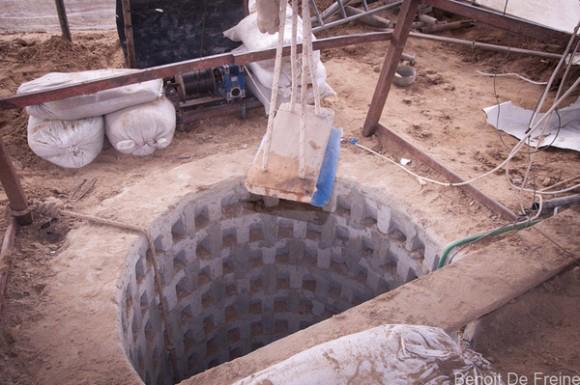
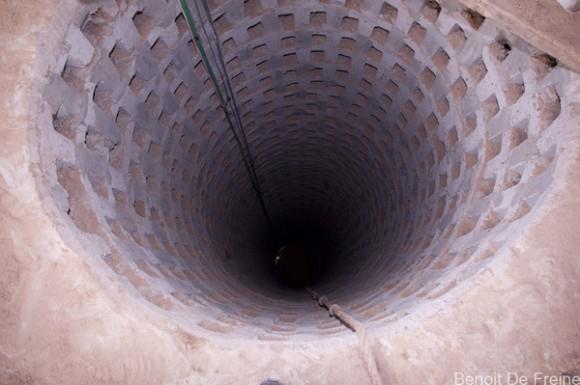
But bringing the relevant equipment and protective clothing into the blockaded territory was no small achievement: everything had to be smuggled in through one of the 1000-metre (yard) underground tunnels that link Gaza with Egypt.

“We brought it over via a very hard route, via the tunnels from Egypt, so that we can play games that are played all over the world, so that the youth of Gaza can play games that are played around the world. This is a peaceful game and it’s really, really fun. There’s no danger whatsoever,” said paintball referee Rami Eid.

Palestinian youths have been teaming up for a chance to play the new game, which involves hiding behind positions laid out in a field, before jumping out to spray competitors with balls of colored paint.

“We came to play paintball today. It’s the first time I’ve played it and it’s a really fun game, a really nice game. We were a big group but it’s a nice game with suspense, preparation, action and war. Young men like us like these kinds of games. It’s a nice game and we’ve enjoyed it a lot,” said participant Ahmad Abu Ryaleh.

Paintball has become increasingly popular around the world in recent years, with national teams going head-to-head in regional and world tournaments.

Enthusiasts say it is a game of skill and team-work – something Gaza’s new participants are just discovering.

“I am really happy, I hope there will be more things like this because it is better for young people to use up their energy playing these games, rather than getting up to no good somewhere else,” said Abu Ryaleh.

But with an entrance fee of 10 shekels ($2.5), 50 shekels ($12.8) to rent the paintball field and 30 shekels ($7.6) for 50 paintballs, the experience is beyond the reach of most Gazans.

A recent U.N. report said tougher Israeli policies and settlement expansion were pushing all Palestinian territories deeper into poverty.

Amid persistently high unemployment, one in two Palestinians was now classified as ‘poor’, the UNCTAD report said.

Crocodile roams sewers in northern Gaza Strip city: report

Locals say the croc has evaded captors for two years, has slaughtered farm animals.

By Philip Caulfield New York Daily News

November 4, 2012

A crocodile lurking in the sewers has been terrorizing locals in small city in the northern Gaza Strip, according to a report.

Rajab al-Ankah, head of the Northern Gaza Sewage Station in Beit Lahia, said the five-and-a-half foot sewer croc most likely escaped from a nearby zoo as a baby and has avoided capture for more than two years, Al Arabiya news reported.

“The nets were set up to capture the crocodile, but it managed to escape,” he told the network.

“The slippery ground in the area around the swamps near Beit Lahia in northern Gaza made the escape easier and the crocodile disappeared once more.”

Local in Beit Lahia, in northern Gaza, said the croc slaughtered a farmer’s two goats that were grazing too close to the sewers.

The beast slips out of the sewage basins to hunt for food, and scurries back underground, evading captors, Ankah said.

“It came as a baby and now it is huge and the more it grows the more dangerous it becomes for the residents of the area and their livestock,” Ankah told the network.

Residents are hoping to catch the croc before it attacks a person, the network said.

Read more: http://www.nydailynews.com/news/national/sewer-crocodile-terrorizes-northern-gaza-article-1.1196425#ixzz2BI5Siq1B


A Message from Young Palestinians in Gaza to the World!

A circus comes to Gaza _ minus lions and ladies

By DIAA HADID, Associated Press – 7 hours ago

GAZA CITY, Gaza Strip (AP) — The circus came to Gaza on Friday, accompanied by blaring music, juggling clowns and fire blowers — but getting it there required its own high-wire act.

No women performers were included for fear of offending conservative Palestinians and the Gaza Strip’s militant Hamas rulers, and the circus’ lone lion and tiger were left behind because of the high cost of transporting them legally into Gaza.

The Egyptian National Circus put on its first show of a month-long visit to the impoverished coastal territory on Friday, a sign of warmer relations between Hamas and post-revolution Egypt, which is governed by the Islamic group’s ideological parent, the Muslim Brotherhood.

Although it’s not state-sponsored, the Egyptian circus could only come because the country’s government loosened restrictions on the flow of passengers in and out of Gaza. More foreigners now enter Gaza, including the ruler of the resource-rich Gulf state Qatar earlier this week.

Once in Gaza, the Egyptians’ faced an unusual situation — most Palestinians here don’t know what a circus is.

“I think it’s going to be really surprising for most people,” said Riwa Awwad, 19, ahead of the opening night.

“Gazans are famous for not liking anything and I think they’ll do the impossible to entertain us,” said Awwad, who came with her extended family to the fairground on Friday.

In an ironic twist, the cheery circus with its flashing lights was held on the grounds of a notorious security prison that was destroyed during an Israeli offensive four years ago.

For the Gazans fortunate enough to see the opening show, it was a welcome relief from conflict and despair. The fairgrounds were packed with excited children in new cloths, women in glittery headscarves, others in black face veils, and men in suits and freshly pressed shirts. Families snacked on pumpkin seeds.

They hollered and cheered as a tight-rope walker wiggled his hips and belly-danced on a thread suspended above the ground. A performer hurled silver knives around volunteers. A red-clad fire blower shot whooshing, yellow licks of flame out of his mouth. Two clowns dressed in yellow-and-blue bumbled and fumbled as they tried to juggle, delighting children.

It took months to arrange the visit to the impoverished territory, where 1.6 million people live in a 25 mile-long sliver wedged between Israel and Egypt and face a punishing blockade imposed after Hamas seized control in 2007.

Aside from a circus’ brief visit in the 1990s, there’s never been anything like it since Israel captured the strip from Egypt in 1967. Israeli forces and settlers withdrew in 2005.

Businessman Mohammed Faris said he remembered seeing the circus under Egyptian rule in the 1950s, when Gaza was still a liberal place with casinos and bars. He said he recalled as a child seeing men walking on nails and female acrobats flying across stage.

“It was men and women – pretty women,” he said.

Not this time around.

Organizer Mohammed Silmi said female performers had to stay behind because the circus was worried that leaping ladies in tights would offend Gazans.

He said Hamas didn’t explicitly ban women but he was asked to abide by Gaza’s “traditions” when he petitioned to get the circus to come.

In practice, the circus wiggled a little around the no-women rule. At one point a man in drag, sporting a brown wig and red dress, sang and danced with Bunduk the clown.

After Hamas seized control of Gaza in 2007, Israel and Egypt imposed a blockade that aimed to weaken the militants who seek Israel’s destruction.

Under international pressure, it was loosened after Israel raided a blockade-defying boat and killing nine Turkish activists aboard in 2009. Key restrictions still remain on exports and importing raw materials.

All the circus equipment came through the Rafah border crossing, but expensive fees and cumbersome paperwork kept the circus from bringing lions, tigers and horses across the border.

Gaza’s makeshift zoos and other merchants often bypass that problem by hauling animals through smuggling tunnels linking the territory to Egypt. In one famous scene captured on film, Gazans used a crane to lift a camel over the border fence as the animal twitched in the air in agony.

Animal welfare aside, Gaza’s main zoo recently turned to improvised taxidermy to keep its deceased animals on exhibit.

The area also continues to be violent. As circus technicians were setting up their tent earlier this week, Palestinian militants were fighting Israeli forces in tit-for-tat rounds of rocket fire and retaliatory airstrikes.

Egyptian technician Khalil Gomaa, 55, jolted upon every crashing boom. He told his children he was in Jordan so they wouldn’t be worried. “But I’m worried,” he said.

But the circus’ biggest challenge may be packing the 1,000-seater tent for the month-long visit.

A series of Palestinians interviewed didn’t know what a circus was, and the tickets — ranging from $5-$10 seats — are too expensive for most of Gaza’s traditionally large families.

Some 40 percent of Gazans live on less than $2 a day, a third are unemployed and most need U.N. donated food.

They include the mother of eight, Sabrine Baoud, and her unemployed husband. After the circus was explained to her, Baoud, 35, said she was glad her children didn’t know anything about it.

They’d never be able to afford to go.

Getting ready for Eid: Palestinians smuggle sheep to Gaza through tunnel

Palestinians smuggled sheep to Gaza in a tunnel under Egypt’s border for the Muslim celebration of Eid Al-Adha, where goats, sheep and camels are slaughtered commemorating Abraham’s willingness to sacrifice his son Ismail on God’s command.  For more incredible pics go to http://www.demotix.com/news/1544458/palestinians-smuggle-sheep-gaza-through-tunnel-under-egypt-border/all-media


Ship to Gaza Sweden

We are sailing!

Publiceringsdatum:
2012-10-01

The port authorities in La Spezia in northern Italy finally decided to not give in to Israeli  pressure. Just minutes ago Ship to Gaza and its vessel Estelle got final clearance to depart from port. Credit to the responsible officials who showed integrity and a sense of justice!

We were beginning to recognise the pattern from last years Flotilla all too well, when a Greek government under pressure took the decision to detain all Flotilla boats in Greek ports.

The Israeli Foreign Ministry has already confirmed that it is pressuring those countries whose citizens are on board to prevent them from “approaching” Gaza. If “approaching” Gaza includes sailing from La Spezia to Napoli, that would have been a serious violation of one of the EU’s basic principles: freedom of movement.

It would be unacceptable for the EU to cave in to such pressure, turning against its own citizens and vessels. It is especially serious when such actions are taken against a peaceful, humanitarian action which enjoys wide public and political support. That support is currently being demonstrated in our petition to end the illegal and inhumane blockade of Gaza, which has been signed by thousands of people from all over the world in the last few days .

Ship to Gaza and our partners in the Freedom Flotilla Coalition urge each one of our supporters to follow S/V Estelles journey, and if necessary act in their respective roles and areas: sympathizers, local activists, support organizations, union organizations, EU parliamentarians and national parliamentarians.

Use any resources available to you to protest the Israeli government’s attempt to expand its blockade to ports in northern Italy. Ask your respective foreign ministers questions, and do the same to the EU through the EU Parliament. Conduct support actions to demand that Estelle stays free to sail.

End the blockade of Gaza!

Contacts onboard Estelle:

Victoria Strand + 46 727356564

Mikael Löfgren: +46 707983643

Ship to Gaza-Sweden

www.shiptogaza.se

Spokespersons:

Dror Feiler: +46 702855777

Mattias Gardell: +46 703036666

Ann Ighe: +46 709740739

Victoria Strand + 46 727356564

Media coordinator:

Mikael Löfgren: +46 707983643

Staffan Granér: +46703549687

media@shiptogaza.se

Website:  http://shiptogaza.se/en/Pressrum/Pressmeddelanden/we-are-sailing

EI: Canadians stand in solidarity with Gaza’s besieged farmers, fishermen Eva Bartlett The Electronic Intifada Gaza City 1 October 2012

GAZA CITY (IPS) – “From the coast to eight miles out, the sea is like a desert: it’s sandy and there are no fish,” said Mohammed al-Bakri, tracing a thick line on the wall map before him.

As the general manager of Gaza’s Union of Agricultural Work Committees, al-Bakri is well-versed in the woes of Gaza’s fishermen and farmers. “The Israeli navy attacks the fishermen, arrests them and takes their boats, even within three miles,” he said, referring to the limit the Israeli authorities have unilaterally imposed on Palestinian fishermen.

Under the Oslo accords, Palestinian fishermen are authorized to fish 20 nautical miles into Gaza’s sea. The Israeli authorities have illegally downsized Palestinian fishing waters, using lethal violence to enforce new restrictions on fishing. Palestinian fishermen are routinely attacked by the Israeli navy, using machine guns, water cannons and shells. Abductions of fishermen also occur.  Read more

The Free Gaza movement

The Free Gaza movement is a human rights group that, since August 2008, has attempted to travel ten times to Gaza by sea to break Israel’s illegal stranglehold on1.5 million Palestinian civilians. We entered Gaza successfully five times in 2008; however, we have been violently intercepted on four voyages, including Israel’s MAY 31, 2010 lethal attack on our Freedom Flotilla,when nine of our colleagues were killed and many more injured by Israeli commandos. And, on the tenth voyage in July 2011, Greece prevented us from leaving as Israel and the U.S. outsourced Israel’s occupation of Gaza to Greece.  http://www.freegaza.org/

Public Reading at La Mama October 13th Melbourne Australia

A play that explores the lives of ordinary people living in the besieged Gaza strip in the winter of 2008. Jomana, a woman from the Shati refugee camp, falls in love with Rami, an American Palestinian doctor who arrives as part of the Free Gaza Flotilla. Breaking the siege sparks their love – but can it be sustained?

Public Reading: La Mama Theatre, October 13th at 2pm


To book online go to http://www.trybooking.com/BZDI

Tales of a City by the Sea is a unique and poetic journey into the lives of ordinary people in the besieged Gaza strip prior to, during and after its bombardment in the winter of 2008.

Jomana, a Palestinian woman who lives in the Shati (beach) refugee camp in Gaza falls in love with Rami, an American born Palestinian doctor and activist who comes on the first Free Gaza boats in 2008. Their love is met with many challenges forcing Rami to make incredible decisions the least of which is to take a dangerous journey through the underground tunnels that connect Gaza to Egypt.

Although on the surface this love story appears to explore the relationship between diaspora Palestinians and Palestinians under occupation, there is a broader and more universal theme that emerges – one of human survival and tenacity.

Tales of a City by the Sea avoids political pitfalls, ideological agendas and clichés by focusing on the human story of the people in Gaza. Although the play’s characters are fictional, the script is based on real life events and is a product of a collection of real stories the author Samah Sabawi and her family have experienced during the events of the past several years. Sabawi has written most of the poetry in the play during the three-week bombardment of Gaza in 2008/2009.

Creative Producer: Rand Hazou

Rand Hazou was born in Jordan. His family are from Jerusalem. Rand is an Australian/Palestinian academic and theatre facilitator. In 2004 Rand was commissioned by the UNDP to travel to the Occupied Territories in Palestine to work as a theatre consultant running workshops for Palestinian youths. In 2009 Rand was awarded a PhD in Theatre and Drama at La Trobe University. His thesis examined the latest wave of political theatre in Australia dealing with Asylum Seekers and Refugees. In 2011 Rand was awarded a Cultural Leadership Skills Development Grant from the Australia Council for the Arts to develop The 7arakat|Harakat Project, involving a series of theatre-related initiatives between Australia and Palestine. As part of this grant, Rand travelled to Palestine in October 2011 to participate in an internship with Al-Kasaba Theatre in Ramallah. Rand is currently undertaking an internship with Multicultural Arts Victoria. As an academic he has taught across a wide variety of subject at La Trobe and Monash Universities. He is currently a lecturer and tutor in the theatre and drama program at La Trobe University.  For more information on the 7arakat project visit http://www.centreforcreativearts.org.au/projectspace/7arakat.phps

The Cast

Osamah Sami

Osamah Sami is an actor and writer of Iraqi heritage. Born in 1983 in Iran – he migrated to Australia in 1995.  Osamah has worked extensively on stage, including playing the role of Saddam Hussain in “Saddam: The Musical”, as well as other productions, including Sinners (La Mamma), Homebody/Kabul (Theatre@Risk), Long Day’s Dying (La Mamma), Baghdad Wedding (Belvoir St.), Blackbox 149 (La Mamma)…His TV roles include East West 101 (SBS), City Homicide (Seven), Rush (Ten), Sea Patrol (Nine), series regular in the 13-part series Kick (SBS), the lead role in Tony Ayres’ award winning tele-movie Saved opposite Claudia Karvan, the lead in Dee McLachlan’s feature film “10 Terrorists” and the award winning short 296 Smith Street as well as the feature film Lucky Miles.  He is currently working on a feature film with director Tony Ayres “Ali’s Wedding” which he has co-written with Andrew Knight.

Veronica Porcaro

Since graduating from Flinders University Drama Centre, Veronica has had a very diverse and dynamic acting career in Theatre, Film, Television and Role Playing/Training across many arenas from mainstream theatre and television to educational and political theatre, script development and corporate work.  Her credits include: The Grace of Mary TraverseSix Characters in Search of An Author, Stories from the UndergroundA Translation in HistoryTwelfth NightThe Jungle of Cities10 x10 play seriesMeat Pies and MortadellaNile BlueGP, Water RatsHeart Break HighMurder CallBlue HeelersSatisfactionWhatever Happened To That Guy and Neighbours.

Hannah Norris

Hannah Norris is a widely acclaimed actress of the independent and professional stages of Australia. She is perhaps best known for her powerful performance of the one-woman show My Name is Rachel Corrie (Daniel Clarke) in Melbourne and Adelaide, receiving Adelaide Critics Circle and Victorian Green Room Award nominations, and the 2010 ATG ‘Curtain Call’ Award for Best Female Performance. Hannah has recently returned to Melbourne from a national tour of David Williamson’s Let the Sunshine (Hit Productions) and is currently working on a 2013 production of Tahli Corin’s One for the Ugly Girls. For more info, go to www.hannahnorris.com.au

Wahibe Moussa

Wahibe Moussa is a performance-maker, writer and Green-Room award winning actor, currently studying in the Master of  Writing for Performance at the Victorian College of the Arts. She has gained respect as a Cultural/Language Consultant through Theatre and television projects.  Wahibe’s writing practice is informed by her work with diverse Refugee and Indigenous communities, and her interest in connections between the personal and political; the exchange of power within relationships.  As a Community Artist, Wahibe works collaboratively in Theatre, Visual Art and Writing Projects in Melbourne and Sydney.

Jomana Najem

Jomana Najem has a background in Film Production and literary journalism, and has been extensively involved with the Arabic speaking community for the last ten years in various capacities.  Jomana has also written, directed and produced several short films and documentaries. She has worked both behind and in front of the camera as an actor and television presenter. She has is the writer of a feature length film script that centres around the lives of several Lebanese Australians, and their struggles to overcome their past. “The Borrowed Prophet” is currently in pre-production and has been endorsed by the Lebanese and wider Arabic speaking community.

Majid Shokor

Majid Shokor is a writer, researcher, and actor for stage and screen.   Originally from Baghdad, he lives and works in Melbourne.  Since his arrival in Australia in 2001, he has appeared in many plays, short films, TV series and the feature film Lucky Miles, for which he was also the cultural consultant.  He worked with many acclaimed directors and writers such as Jean-Pierre Mignon, Daniel Keen and Nigel Jamieson to name few.  His performances have received critical acclaim and been honoured with two prestigious Green Room Award nominations for Best Actor in Independent Theatre, in 2005 and 2009.  Majid holds a Master degree (Honours) and a Post-Graduate Diploma (1st class Honours) in Community Cultural Development from the Victorian College of the Arts – Melbourne University

Ryan Smith

Ryan is a second year student and is currently studying arts at La Trobe University. He has been involved in many highly successful productions in their student theatre program. He has also been highly involved in amateur theatre companies in his home town. He has a large background in musical theatre. This is Ryan’s first production outside of his university and local area.

Beth Sherwell – lighting and sound

Beth is no stranger to the world of theatre, television and drama; having worked on the TV show Neighbours as well as various other films. Most recently she played the character of Amy March (the youngest sister) in the  production ‘Little Women’.  ‘Tales of a City by the Sea’ is Beth’s first technical gig, she is currently completing a degree in English and Drama Majors.

James Crafti – lighting and sound

James Crafti is co-manager of Under the Hammer an Activist Artists Hub in Coburg a place he founded to explore art within a social justice framework. Crafti completed a Bachelor of Creative Arts at La Trobe in 2009 and directed plays at La Trobe including Creationism, Rope and Seven Jewish Children. In 2010 James worked as an assistant director on Melbourne Worker’s Theatre’s show Yet to Ascertain the Nature of the Crime. Crafti also directed two plays with Platform Youth Theatre Mutha and The Deserters, and is now serving on Platform’s Board. He is currently undertaking his Masters in Community Cultural Development at the Victorian College of the Arts.

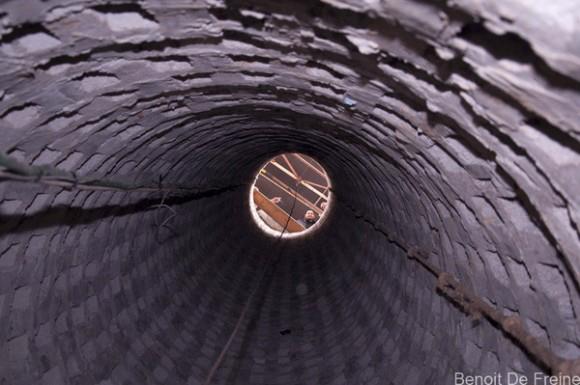
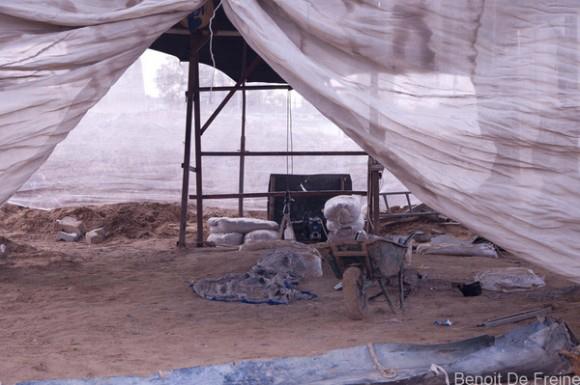
Journey through the Gaza tunnels

Image

Image

Image

Image

Image

Image

Image

Image

Image

Image

Image

Image

Inshallah: a virtual tour of the Gaza Strip

http://www.youtube.com/watch?v=oq-enFV5gXw