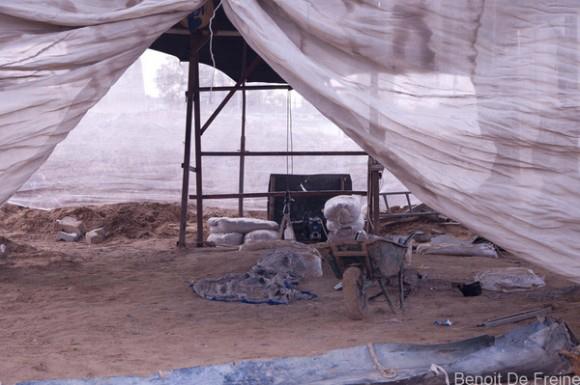
Getting ready for Eid: Palestinians smuggle sheep to Gaza through tunnel

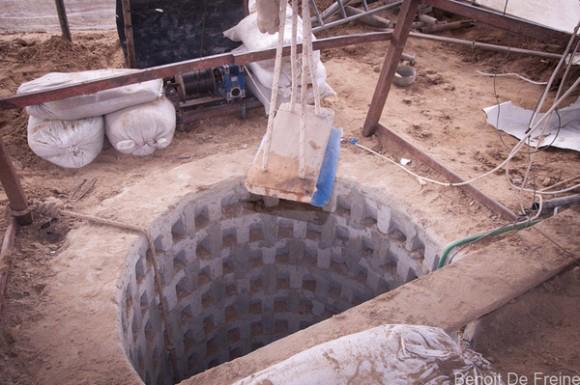
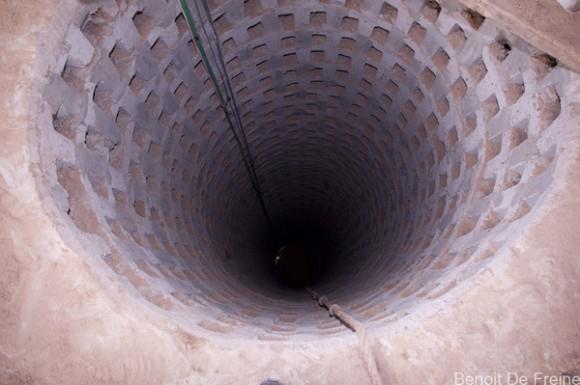
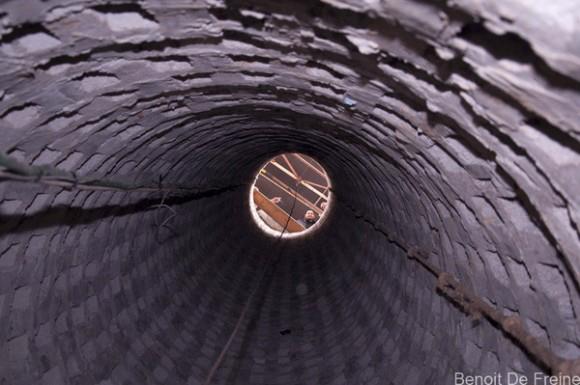
Palestinians smuggled sheep to Gaza in a tunnel under Egypt’s border for the Muslim celebration of Eid Al-Adha, where goats, sheep and camels are slaughtered commemorating Abraham’s willingness to sacrifice his son Ismail on God’s command.  For more incredible pics go to http://www.demotix.com/news/1544458/palestinians-smuggle-sheep-gaza-through-tunnel-under-egypt-border/all-media


A compelling article: From manifesto to reality ‘Gaza Youth Breaks Out’

“My story is marked by violence, persecution, arrests, abuse and resistance,” writes Matte

It has been almost two years now since we wrote our manifesto. We called it a manifesto, but in reality, I’m not sure what it was.

Was it a manifesto, or was it a cry for help? Perhaps, an accusation, or even perhaps a demand to the world and to ourselves; a demand for change from the outside and from within.

It was before the uprisings began around us, and they have been roaring the last two years in Tunisia, Egypt, Libya, Syria and Bahrain. But we had felt like shouting in the dark, and while this raging had brought light into the darkness of the dictatorships around us, the night around us has not thinned even a bit. No, if anything, it has only become darker.

We had come out from under the rubble in 2009, when Israel had embarked on what they liked to call a “war” – which in actuality had been a massacre – leaving 1,385 people dead, among them 318 children. They left Gaza in ruins.

We had built up Gaza again with our bare hands, even though cement was blockaded; we had buried our loved ones and tried to cover the holes in our hearts which they left. A year later, we regained the strength to shout out our unbearable situation to the world, and to unite for a fight against the hell we were – and are – living in.

We too organised large demonstrations, even though they were overshadowed by the revolutions taking place in the surrounding countries. Our demonstrations in the West Bank and Gaza Strip began on March 15, 2011, bringing out a large part of the population onto the streets. We wanted to achieve the unity of our parties and leaders – Hamas and Fatah – who in the quest to have seize power and wealth have betrayed our land of Palestine and the dreams and demands of our youth.

For this we demonstrated, for this we put in weeks of work to bring the people of Gaza to the streets, for this we were knocked down by thugs on the streets, for this we have been arrested and abused.

And for this goal, we achieved what first had seemed promising: Discussions, negotiations and unity efforts by our leaders. And still, all of that ended up in empty promises.

Manifesto? That sounds too fierce, like a struggle that might produce victory. But we are tired, two years later. Tired of the empty promises surrounding us. There is a peace process, but one that is an insult to the word “peace”, and that makes one wonder for whom such a farce is still seriously maintained.

Under siege

Since 2006, the ongoing siege punishes us daily – we could mention all the UN conventions it violates, as if that wasn’t mentioned enough already. Collective punishment for all of us, for having elected the wrong party, for having held one Israeli soldier who is now free, while thousands of our prisoners languish in Israeli jails. Collective punishments for being Palestinians, for being born in Gaza.

And that siege means that our hospitals regularly declare a state of emergency because they don’t have enough medicine or medical equipment. This siege means that we are literally sitting in the dark most of the time – without connection to the internet and thus without any connection to the outside world – because there is no electricity.

It also means that the discourse in the media is about whether there is enough food coming in, whether the siege has lifted a bit and if now there are enough sorts of Israeli chips packets in our supermarkets. Like we are animals in a zoo and the question is whether we are fed enough. We are, I can tell you. We don’t need your aid packages, we don’t need your chips, nor your bread.

We had well-functioning factories, which were bombed away. We had rich land that could produce not only enough food for us, but enough to export it to the whole world. If that land wasn’t raped daily by Israeli bulldozers, and if we weren’t forbidden to enter by military declarations. There is still an ongoing siege, keeping us needy like beggars – and we get bread instead of rights.

There are talks about unity and re-elections, consisting of words which are so empty that it is not even worth listening to them.

And then there are the new Arab governments. The new Egypt, which wants to open the Rafah border crossing in order to no longer be complicit in imprisoning us in our 5 by 20 km hell. But even with so many visits by Hamas to Cairo, it’s still just words. When will this happen? When will there be open borders instead of just assurances? When will our children no longer be born into a world where there is no freedom, no adequate medical care, no work, no future, nothing but violence and falling bombs?

We are still young enough to fight for our own future, not only for that of our children, and yet old enough to be tired. Tired of the daily struggle for survival, which distracts us from our dreams. Tired of our own government, which meets our hopes with violence.

Story of resistanceWe are still young enough to fight for our own future, not only for that of our children, and yet old enough to be tired. Tired of the daily struggle for survival, which distracts us from our dreams. Tired of our own government, which meets our hopes with violence.

I still regularly keep in touch with people in Gaza. The talk is usually about the lack of electricity, bombs in the night, graduates with no job opportunities, the tight grip of the Hamas government, and walls that are nearly impossible to scale. Yes, mainly they talk about leaving. Leaving Gaza, leaving this prison and dumpster of the world. Many of my friends left like I did, and many more want to.

We wrote this manifesto because we wanted to live. Not because we wanted to be tortured, arrested and sacrificed. No, we are young enough to demand a future for ourselves, and we don’t see a future for us in Gaza right now.

My friends and I were forced to leave by a Gaza that has been made unbearable by violence and arrests through Hamas. A future in Gaza has been robbed from us by a siege that leaves us no jobs or opportunities. Nevertheless, even though we might be leagues apart and spread throughout the world, we will never cease to see a future for Gaza. Palestine, Gaza, that is our land, that is where we belong.

There’s an olive tree in my garden, and I have always dreamed of seeing my children playing under it. Wherever I might be now, one day my children will be playing under this olive tree, in a free Palestine, without fear for their lives, and that is what I will keep fighting for.

Yes, we are weary. But still, my story – and the stories of all the other amazing youth of Gaza – is and always will be a story of resistance, of resilience. Of always coming back to the land we belong to. We carry the hope of a free Gaza, a free Palestine and a future there for us in our hearts, and in our hands, in our daily work.

We struggle every day against our obstacles and for our dreams, and you can see that in all the amazing creativity coming out of Gaza, in our art, poems, writing, videos and songs, you can hear it and meet us in the talks we give all over the world.

Yes, we wrote a manifesto, and maybe that was just the bright and loud outcry of the beginning of a journey, whose path is hard and tiring, thorny and also often very quiet and dark. But it is always there.

So two years later, we say: We will be free. We will live. We will have peace. And we are always out there, fighting our daily struggle, full of the resistance we inherited from a long struggle for Palestine. We live and write and say and sing silent or load manifestos every day. Just listen to us.

Mohammed Matter ‘Abu Yazan’, from Gaza, is a political activist, writer and a member of Gaza Youth Breaks Out movement. He is currently in Germany, about to resume his studies.

The views expressed in this article are the author’s own and do not necessarily reflect Al Jazeera’s editorial policy.  

Source:  Al Jazeera  http://www.aljazeera.com/indepth/opinion/2012/10/201210159115846939.html

Life behind barbed wire in Gaza

  • Date 19.10.2012
  • Author Tania Krämer / sms
  • Editor Ben Knight

Though local elections are slated for the West Bank, Palestinians in Gaza won’t be casting ballots. Hamas, which controls Gaza, has boycotted the elections, leaving the 1.6 million people there in a difficult position.

Between piles of used spare parts and a container of motor oil, Munzer Al Dayya is working on a generator. The mechanic is a popular man in Gaza City, where power can go out for as long as eight hours a day, and he said he’s earning a decent living thanks to the blackouts.

“Every day that we get through is good, but no one knows what’s coming,” he said. “The only thing that’s clear is that the next day will be worse than the previous day. Why, how, and for what? Who knows? No one can explain what’s going on here.”

Al Dayya said getting an explanation for what’s happening in Gaza City depends on who you ask. But one thing is clear – Hamas controls the Gaza Strip and has expanded its control since taking power five years ago. Neither an Israeli blockade nor the US and European isolation policy has been able to change this.

Hamas, labeled a terrorist group by the West, has developed its own bureaucratic structures, ranging from an administration to an all-round security service. Various observers have noted that the political separation between Gaza and the West Bank has been widened by the separate governing structures in the two regions.

No local elections in Gaza

Local elections scheduled to take place in the West Bank on Saturday are expected to widen the gap. Hamas is not taking part in the poll, leaving voters there to choose between the Fatah party and some independent candidates.

“The elections cannot be transparent and fair,” said Hamas spokesperson Fawzi Barhoum. “Many of our Hamas leaders and members are in prisons run by the Palestinian Authority. These are Fatah elections – not Palestinian elections.”

Read more http://www.dw.de/life-behind-barbed-wire-in-gaza/a-16318900

Gaza deaf restaurant a chance to change perceptions

Sydney Morning Herald

October 19, 2012 – 10:16AM

The stylish Atfaluna restaurant near Gaza port stands out in a city with few facilities for the disabled. Waiters and cooks use sign language, guests point to selections from the menu and what ensues is a spontaneous form of communication that organizers hope will break down bias and barriers.

“Deaf people have determination and there are no worries except when it comes to communication, the language problem. At first we may get translators to help us with the speaking clients,” supervisor Ayat Imtair said in sign language.

After six months of training with her staff, she was confident the service would go smoothly.

“This is a call on the community, and a working chance for the deaf to help them engage with the community,” she signed.

Twenty years ago Palestinian attitudes to deaf people were negative, said Naeem Kabaja, director of Atfaluna Society for Deaf Children in Gaza, which runs the restaurant.

“It was perceived by many as a mental disability. But we’ve been able to change that and it has since improved, through our work, the spread of sign language, activities by the deaf and raising public awareness about this disability,” he said.

Still, Kabaja said, many of the deaf themselves tend to shy away from engagement with broader society, afraid of communications obstacles and expecting little understanding.

The staff of 12 were enthusiastic on opening day.

“We’re excited. There might be some difficulty at the start but we will overcome it. We’re all trained in lip-reading and that will help us take orders,” said cook Niveen, preparing a dish of spicy chicken balls.

The restaurant was established with help from the Drosos Foundation of Switzerland to promote income generation by the deaf in Gaza, where the unemployment rate is over 25 per cent.

About 1 percent of Gaza’s 1.6 million people suffer from total or near-total deafness. They can attend school up to ninth grade but have no opportunity to go on to a university education in the territory, said Sharhabeel Al-Zaeem of Atfaluna.

“Unfortunately they have to leave Gaza for that,” Al-Zaeem said. “We are doing out utmost to make special classes for the deaf in universities. We are liaising with different universities to see if there is a chance for the deaf to get places.

Reuters   http://www.smh.com.au/small-business/startup/gaza-deaf-restaurant-a-chance-to-change-perceptions-20121019-27v4e.html#ixzz29hx0sGS5

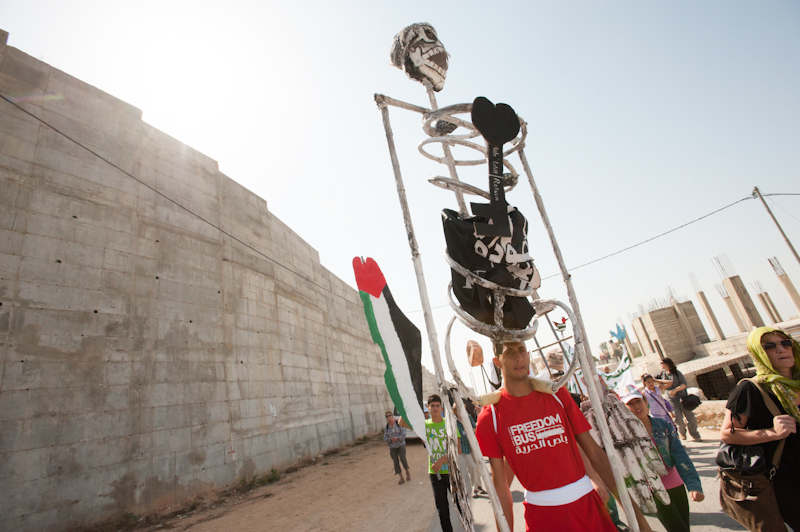
Freedom Bus takes cultural resistance to the streets

Freedom Bus takes cultural resistance to the streets

The Freedom Bus, an initiative of Jenin’s Freedom Theatre, used interactive theatre and cultural activism to bear witness, raise awareness and build alliances throughout occupied Palestine and beyond. From September 23-October 1 2012, Palestinians and allies from around the world took part in a 9-day solidarity ride through 11 communities in the West Bank of occupied Palestine. Read more

Ship to Gaza Sweden

We are sailing!

Publiceringsdatum:
2012-10-01

The port authorities in La Spezia in northern Italy finally decided to not give in to Israeli  pressure. Just minutes ago Ship to Gaza and its vessel Estelle got final clearance to depart from port. Credit to the responsible officials who showed integrity and a sense of justice!

We were beginning to recognise the pattern from last years Flotilla all too well, when a Greek government under pressure took the decision to detain all Flotilla boats in Greek ports.

The Israeli Foreign Ministry has already confirmed that it is pressuring those countries whose citizens are on board to prevent them from “approaching” Gaza. If “approaching” Gaza includes sailing from La Spezia to Napoli, that would have been a serious violation of one of the EU’s basic principles: freedom of movement.

It would be unacceptable for the EU to cave in to such pressure, turning against its own citizens and vessels. It is especially serious when such actions are taken against a peaceful, humanitarian action which enjoys wide public and political support. That support is currently being demonstrated in our petition to end the illegal and inhumane blockade of Gaza, which has been signed by thousands of people from all over the world in the last few days .

Ship to Gaza and our partners in the Freedom Flotilla Coalition urge each one of our supporters to follow S/V Estelles journey, and if necessary act in their respective roles and areas: sympathizers, local activists, support organizations, union organizations, EU parliamentarians and national parliamentarians.

Use any resources available to you to protest the Israeli government’s attempt to expand its blockade to ports in northern Italy. Ask your respective foreign ministers questions, and do the same to the EU through the EU Parliament. Conduct support actions to demand that Estelle stays free to sail.

End the blockade of Gaza!

Contacts onboard Estelle:

Victoria Strand + 46 727356564

Mikael Löfgren: +46 707983643

Ship to Gaza-Sweden

www.shiptogaza.se

Spokespersons:

Dror Feiler: +46 702855777

Mattias Gardell: +46 703036666

Ann Ighe: +46 709740739

Victoria Strand + 46 727356564

Media coordinator:

Mikael Löfgren: +46 707983643

Staffan Granér: +46703549687

media@shiptogaza.se

Website:  http://shiptogaza.se/en/Pressrum/Pressmeddelanden/we-are-sailing

The National: West Bank theatre founder languishes in prison

West Bank theatre founder languishes in prison

JENIN, WEST BANK // Six years ago, a fierce Palestinian fighter laid down his weapons and helped found a liberal performing-arts theatre in Jenin’s conservative refugee camp. It was a remarkable turnaround for Zacharia Zubeidi, who fought for Fatah’s Al Aqsa Martyrs’ Brigades during the second intifada, to exchange violence for what he called cultural resistance against Israel’s occupation of the Palestinian territories.

EI: Canadians stand in solidarity with Gaza’s besieged farmers, fishermen Eva Bartlett The Electronic Intifada Gaza City 1 October 2012

GAZA CITY (IPS) – “From the coast to eight miles out, the sea is like a desert: it’s sandy and there are no fish,” said Mohammed al-Bakri, tracing a thick line on the wall map before him.

As the general manager of Gaza’s Union of Agricultural Work Committees, al-Bakri is well-versed in the woes of Gaza’s fishermen and farmers. “The Israeli navy attacks the fishermen, arrests them and takes their boats, even within three miles,” he said, referring to the limit the Israeli authorities have unilaterally imposed on Palestinian fishermen.

Under the Oslo accords, Palestinian fishermen are authorized to fish 20 nautical miles into Gaza’s sea. The Israeli authorities have illegally downsized Palestinian fishing waters, using lethal violence to enforce new restrictions on fishing. Palestinian fishermen are routinely attacked by the Israeli navy, using machine guns, water cannons and shells. Abductions of fishermen also occur.  Read more

Journey through the Gaza tunnels

Image

Image

Image

Image

Image

Image

Image

Image

Image

Image

Image

Image

Inshallah: a virtual tour of the Gaza Strip

http://www.youtube.com/watch?v=oq-enFV5gXw